
Ci siamo passati tutti. Ti allunghi per prendere qualcosa su un treno, senti un odore e speri silenziosamente che non sia il tuo. L'odore corporeo è una di quelle piccole preoccupazioni quotidiane di cui la maggior parte delle persone preferirebbe non parlare — eppure quasi tutti devono farci i conti.
La soluzione abituale? Spruzzare un po' di deodorante e sperare per il meglio. Ma un altro approccio sta conquistando sempre più sostenitori, prima in Giappone e ora in Europa e Nord America: l'estratto di cachi. Invece di mascherare gli odori con il profumo, agisce direttamente sulle molecole responsabili dell'odore. Vediamo come funziona e perché potrebbe trovare posto nel tuo mobiletto del bagno.
Da dove proviene realmente l'odore corporeo?
Ecco un fatto che sorprende la maggior parte delle persone. Il sudore, di per sé, non ha quasi alcun odore. È composto principalmente da acqua e sale. La parte sgradevole arriva dopo — quando entrano in gioco i batteri presenti sulla pelle.
Questo è importante, perché spiega perché l'estratto di cachi agisce in modo diverso dal solito. Capisci da cosa è causato l'odore e puoi comprendere perché neutralizzarlo abbia più senso che limitarsi semplicemente a coprirlo.
Ghiandole sudoripare e batteri della pelle: i veri responsabili
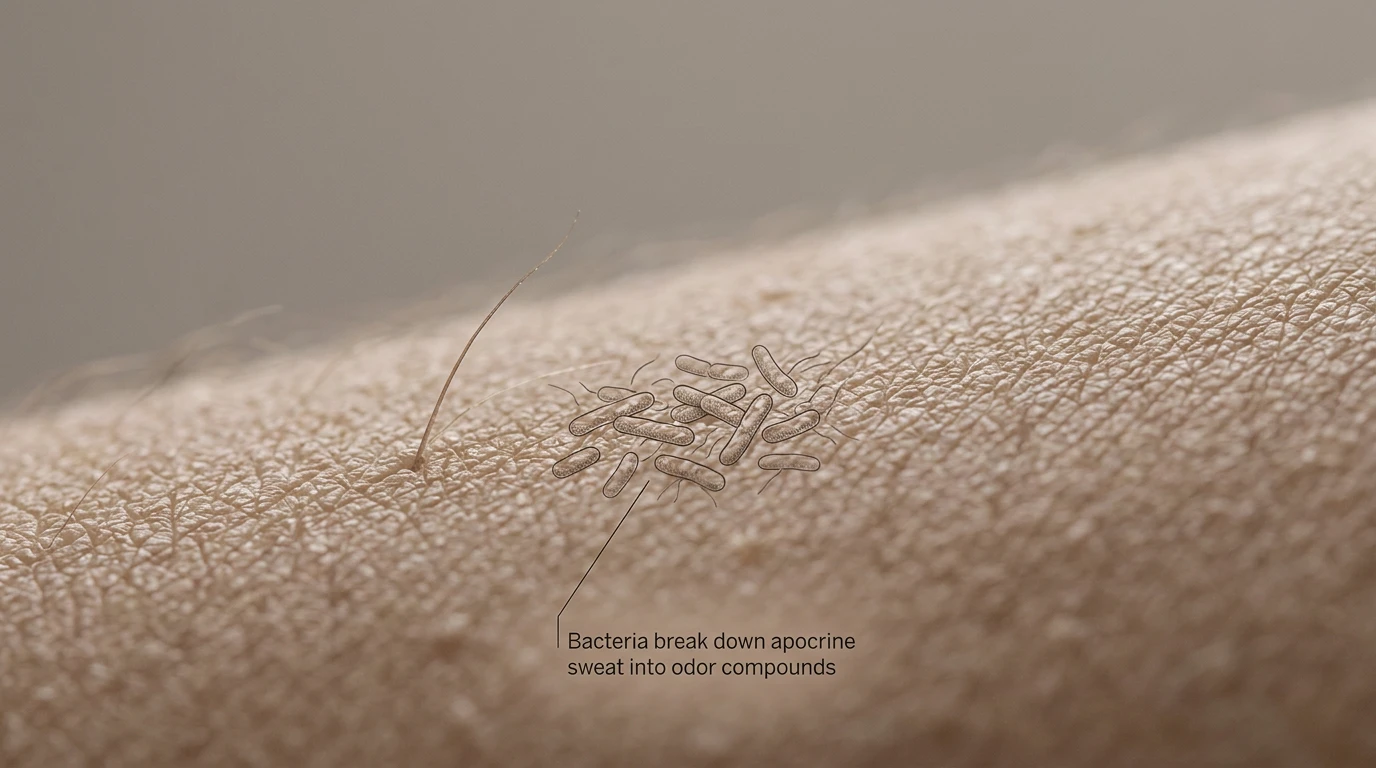
Il corpo ha due tipi principali di ghiandole sudoripare. Le ghiandole eccrine si trovano in tutto il corpo e rilasciano il sudore acquoso che lo raffredda. Le ghiandole apocrine, presenti soprattutto sotto le ascelle e all'inguine, producono un fluido più denso e ricco di proteine.
È questo secondo tipo a causare il problema. Quando i batteri della pelle si nutrono del sudore apocrino, lo scompongono in composti maleodoranti. Il sudore non era il problema — lo era la "digestione" batterica dello stesso.
Il ruolo del nonenale nell'"odore corporeo dell'invecchiamento"
Un composto merita particolare attenzione: il 2-nonenale. Nei primi anni 2000, i ricercatori lo hanno identificato come la fonte di quel caratteristico profumo spesso descritto come odore di "persona anziana".
Il nonenale si forma quando gli acidi grassi presenti sulla pelle si ossidano e tende ad aumentare con l'età. Ecco l'aspetto più frustrante. È oleoso e aderisce alla pelle, quindi il normale sapone non riesce a sciacquarlo via facilmente. Questo è esattamente il tipo di odore che l'estratto di cachi contrasta efficacemente.
Fattori comuni che peggiorano l'odore
Alcune situazioni quotidiane possono intensificare l'odore corporeo senza che tu te ne accorga. I cibi piccanti, l'aglio e l'alcol rilasciano composti attraverso i pori. Lo stress stimola le ghiandole apocrine. Il calore e l'attività fisica, ovviamente, fanno sudare di più. E saltare una doccia lascia ai batteri più tempo per agire.
| Fonte dell'odore | Cosa lo causa | Area tipica del corpo |
|---|---|---|
| Sudore apocrino + batteri | Sudore ricco di proteine scomposto dai microbi | Ascelle, inguine |
| 2-Nonenal | Acidi grassi ossidati sulla pelle (aumentano con l'età) | Collo, schiena, petto |
| Sudore eccrino | Surriscaldamento, esercizio fisico | Tutto il corpo |
| Composti correlati alla dieta | Aglio, spezie e alcol rilasciati attraverso i pori | Tutto il corpo |
Che cos'è l'estratto di cachi e come funziona?
Il cachi — noto come kaki (柿) in giapponese — è quel frutto autunnale di un brillante colore arancione che probabilmente avete visto al mercato. Tuttavia, l'estratto utilizzato per il controllo degli odori non proviene dal frutto dolce e maturo che mangereste.
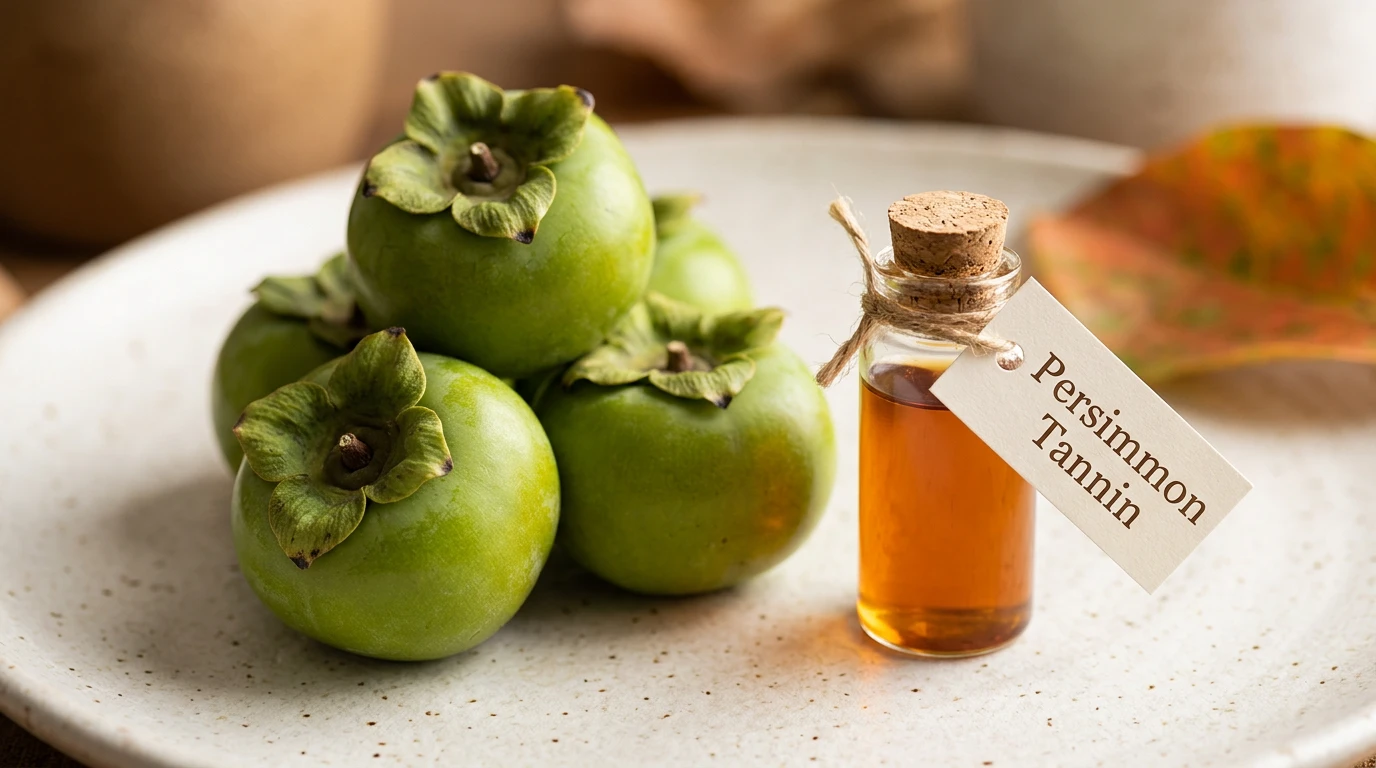
Di solito si ottiene da cachi acerbi e astringenti, ricchi di un particolare polifenolo. Da secoli, le famiglie giapponesi utilizzano il succo di cachi fermentato, chiamato kakishibu, come colorante per tessuti, conservante per il legno e, sì, anche come deodorante. Questa lunga tradizione è uno dei principali motivi per cui oggi è considerato affidabile.
Alla scoperta del tannino di cachi: l'ingrediente protagonista
L'ingrediente chiave è il tannino di cachi. È una grande molecola polifenolica con numerosi siti di legame attivi: immaginate una rete appiccicosa che cattura altre molecole.
Le proprietà deodoranti del tannino di cachi derivano da questa struttura. Rispetto a molti altri tannini vegetali, il tannino di cachi ha una capacità insolitamente elevata di aderire alle molecole responsabili degli odori e trattenerle saldamente.
Come il tannino di cachi riduce l'odore corporeo
Il modo in cui il tannino di cachi riduce l'odore corporeo dipende essenzialmente da due funzioni che svolge contemporaneamente. Intrappola e disattiva le molecole maleodoranti e rende più difficile la vita ai batteri che le producono. Analizziamole entrambe.
Neutralizzazione degli odori attraverso il legame molecolare
Questa è la parte più ingegnosa. Il tannino di cachi non nasconde l'odore dietro una fragranza. Si lega chimicamente alle molecole responsabili degli odori — come il nonenale e l'ammoniaca — e di fatto le blocca.
Una volta legate, queste molecole non possono più arrivare al vostro naso. L'odore non viene coperto: viene neutralizzato a livello molecolare. Si tratta di un meccanismo realmente diverso.
Effetti antibatterici dell'estratto di cachi
Inoltre, gli effetti antibatterici dell'estratto di cachi aiutano a rallentare la proliferazione dei batteri responsabili degli odori presenti sulla pelle. Meno batteri attivi significa che, fin dall'inizio, una quantità inferiore di sudore viene scomposta in sostanze maleodoranti.
Agisce quindi su entrambi gli aspetti del problema — i batteri che generano l'odore e le molecole odorose già presenti. Ecco perché molte persone lo considerano più efficace come eliminatore naturale degli odori corporei rispetto a un semplice spray profumato.
Riduzione dell'odore corporeo da nonenale legato all'età
Ricordi quel nonenale persistente di cui abbiamo parlato? È qui che l'estratto di cachi si è guadagnato la sua reputazione. Poiché la riduzione dell'odore corporeo da nonenale legato all'età è uno dei suoi punti di forza, si è diffuso rapidamente tra le persone sulla quarantina, sulla cinquantina e oltre.
I deodoranti tradizionali spesso non agiscono affatto sugli odori legati all'età. Sono formulati per combattere i batteri delle ascelle, non gli acidi grassi oleosi alla base del nonenale. Il tannino di cachi si lega direttamente al nonenale, contrastando l'unico odore che la maggior parte dei prodotti lascia inalterato.
| Composto odoroso | Azione del tannino di cachi | Risultato |
|---|---|---|
| 2-Nonenale | Si lega e neutralizza | Riduce l'odore dell'"invecchiamento" |
| Ammoniaca | Adsorbimento chimico | Odore del sudore più fresco |
| Batteri | Inibisce la crescita | Meno odore alla fonte |
| Acido isovalerico | Neutralizza l’odore acido | Riduzione dell’odore dei piedi/delle ascelle |
Estratto di cachi vs. prodotti tradizionali che mascherano gli odori con la fragranza
Ora passiamo al confronto che incuriosisce molti lettori. Se avete usato per tutta la vita un deodorante dal profumo intenso, come si comporta questo prodotto rispetto ad esso?
Mascherare vs. neutralizzare: una differenza fondamentale
I deodoranti tradizionali e i profumi funzionano mascherando gli odori. Sovrappongono una fragranza più intensa e piacevole a quella sgradevole, sperando che la vostra prevalga. Il problema è che l’odore sottostante è ancora presente — semplicemente nascosto, e solo per un po’.
L’estratto di cachi segue il percorso opposto. Rimuove o disattiva direttamente le molecole responsabili degli odori. Nessuna battaglia di profumi sulla pelle. Ecco perché il risultato viene spesso descritto semplicemente come "pulito" anziché "profumato".
Confronto a colpo d’occhio
| Caratteristica | Prodotti che mascherano le fragranze | Prodotti con estratto di cachi |
|---|---|---|
| Come funziona | Copre l’odore con una fragranza più intensa | Neutralizza le molecole responsabili degli odori |
| Durata | Si attenua quando la fragranza svanisce | Controllo degli odori più duraturo |
| Delicatezza sulla pelle | Può irritare la pelle sensibile | Delicato, a base vegetale |
| Effetto sul nonenale | Minimo | Riduzione mirata |
| Profilo della fragranza | Aggiunge un odore di profumo | Inodore / naturalmente fresco |
Perché le opzioni naturali e a base vegetale sono di tendenza
C'è stato un chiaro cambiamento ultimamente. Oggi gli acquirenti leggono con maggiore attenzione gli elenchi degli ingredienti e si orientano verso la bellezza pulita. L'interesse per i neutralizzanti degli odori del sudore a base vegetale è cresciuto di pari passo con il più ampio movimento della cura della persona naturale — che gli analisti di mercato classificano come uno dei segmenti in più rapida crescita degli ultimi anni.
In parte, è una questione di sensibilità cutanea. Le fragranze intense e i sali di alluminio non sono adatti a tutti. In parte, si tratta semplicemente di voler sapere cosa si applica sul proprio corpo ogni giorno. L'estratto di cachi risponde efficacemente a entrambe le esigenze.
Come utilizzare l'estratto di cachi per controllare gli odori
Buone notizie: usarlo è davvero semplice e si adatta perfettamente alla routine che già segui.
Formati del prodotto: saponi, spray, salviette e integratori
Troverai l'estratto di cachi in diverse forme. Saponi e detergenti per il corpo consentono una detersione quotidiana completa sotto la doccia. Spray e roll-on sono ideali per rapidi ritocchi alle ascelle.
Le salviette sono pratiche in viaggio, in palestra o durante un pomeriggio caldo all'aperto. Alcuni marchi offrono persino integratori, anche se la maggior parte delle persone ottiene già numerosi benefici dai prodotti topici applicati direttamente nel punto in cui si forma l'odore.
Scegliere il miglior estratto di cachi per il controllo degli odori
Non tutti i prodotti sugli scaffali sono uguali, quindi vale la pena leggere attentamente l'etichetta. Quando scegli il miglior estratto di cachi per il controllo degli odori, cerca prodotti che indichino effettivamente il tannino di cachi — non un generico "estratto di frutta" usato solo a fini di marketing.
Evita le formule ricche di profumi sintetici intensi: questo vanifica in parte lo scopo neutralizzante del prodotto. E se hai la pelle sensibile, esegui un piccolo test su una zona dell'avambraccio prima di applicarlo su aree più estese.
Consigli per massimizzare la freschezza
L'estratto di cachi funziona al meglio come complemento di buone abitudini, non come loro sostituto. Fai regolarmente la doccia. Presta attenzione alle zone problematiche come collo, schiena e piedi, dove si accumulano nonenale e acidi.
Riapplicalo dopo aver sudato molto o dopo l'attività fisica, poiché il sudore fresco favorisce una nuova attività batterica. Una rapida passata sulla nuca nel pomeriggio può fare davvero la differenza nel corso di una lunga giornata.
Sentirti fresco non dovrebbe significare ricoprirti di profumo. L'estratto di cachi offre un approccio più delicato e intelligente — agisce sull'odore alla fonte invece di nasconderlo. Se sei frustrato dai prodotti che si limitano a coprire gli odori, soprattutto quel persistente odore dell'invecchiamento che nulla sembra riuscire a eliminare, vale davvero la pena provare questo approccio naturale. Dagli qualche settimana. Abbinalo a buone abitudini. Scopri come ci si sente a essere semplicemente puliti.
Domande frequenti
D: L’estratto di cachi elimina davvero l’odore corporeo?
R: Sì, e alla base c’è una solida evidenza scientifica — il tannino di cachi si lega alle molecole responsabili degli odori e le neutralizza, anziché coprirle. Detto questo, è importante mantenere aspettative realistiche. Riduce e controlla efficacemente gli odori, soprattutto quelli associati al nonenale, ma non è una soluzione miracolosa. Un uso costante insieme alla normale igiene garantisce i risultati migliori, ed è una domanda comune per chiunque si chieda se l’estratto di cachi elimini l’odore corporeo.
D: L’estratto di cachi è sicuro per la pelle sensibile?
R: In generale, sì. Essendo di origine vegetale e spesso privo di sostanze chimiche aggressive o sali di alluminio, per molte persone con pelle reattiva risulta più delicato dei comuni antitraspiranti. Tuttavia, ogni pelle è diversa — perciò è sempre consigliabile effettuare un rapido test su una piccola area dell’interno del braccio prima dell’uso regolare.
D: In che modo il deodorante all’estratto di cachi è diverso da un deodorante comune?
R: La differenza principale consiste nella neutralizzazione anziché nella copertura. Un deodorante comune sovrappone una fragranza all’odore naturale e può anche contrastare i batteri. L’estratto di cachi agisce in modo diverso — disattiva chimicamente le molecole responsabili dell’odore. Questo è uno dei principali vantaggi del deodorante all’estratto di cachi: il risultato dà una sensazione di autentica freschezza, anziché di semplice profumazione.
D: Quanto dura l’effetto di controllo degli odori?
R: Dipende dal formato del prodotto e da quanto si suda, ma molti utenti riferiscono una pelle più fresca per diverse ore. Non impedisce di sudare come fa un antitraspirante. Gestisce l’odore anziché bloccare l’umidità. Riapplicalo dopo un’attività intensa e manterrai una sensazione di freschezza per tutta la giornata.
D: L’estratto di cachi può aiutare a contrastare l’odore dei piedi o l’odore corporeo legato all’età?
R: Questa è in realtà una delle sue caratteristiche più efficaci. Il tannino di cachi neutralizza l’acido isovalerico — uno dei principali responsabili dell’odore dei piedi e delle ascelle — e si lega al nonenale, il composto alla base dell’odore corporeo legato all’età. Se queste sono le tue principali preoccupazioni, vale davvero la pena provare l’estratto di cachi contro l’odore corporeo.
D: Ci sono effetti collaterali?
R: Gli effetti collaterali sono poco comuni. Un numero limitato di persone può manifestare una lieve irritazione, ed è proprio per questo che il test su una piccola area è utile. Inoltre, poiché il tannino di cachi contiene un pigmento naturale, alcuni prodotti concentrati possono macchiare leggermente i tessuti di colore chiaro. Lascia asciugare il prodotto per qualche istante prima di vestirti.