
Ecco il verdetto in sintesi: per la maggior parte delle persone che possiedono una macchina da caffè e vogliono farla durare nel tempo, le pastiglie detergenti valgono la spesa. In un solo ciclo fanno ciò che una miscela di aceto e olio di gomito fatica a fare in tre, e proteggono i componenti più soggetti a guasti costosi.
Detto questo, il fatto che ne valga la pena dipende da cosa possiedi, da dove proviene la tua acqua e dal fatto che tu capisca davvero cosa fa una pastiglia all'interno della macchina. Le evidenze riportate di seguito lo spiegano chiaramente. E poiché questa categoria premia tanto chi la vende quanto chi la utilizza, la seconda metà di questo contenuto esamina se le pastiglie detergenti siano un prodotto intelligente da introdurre sul mercato.
La risposta breve: cosa fanno realmente le pastiglie detergenti alla tua macchina
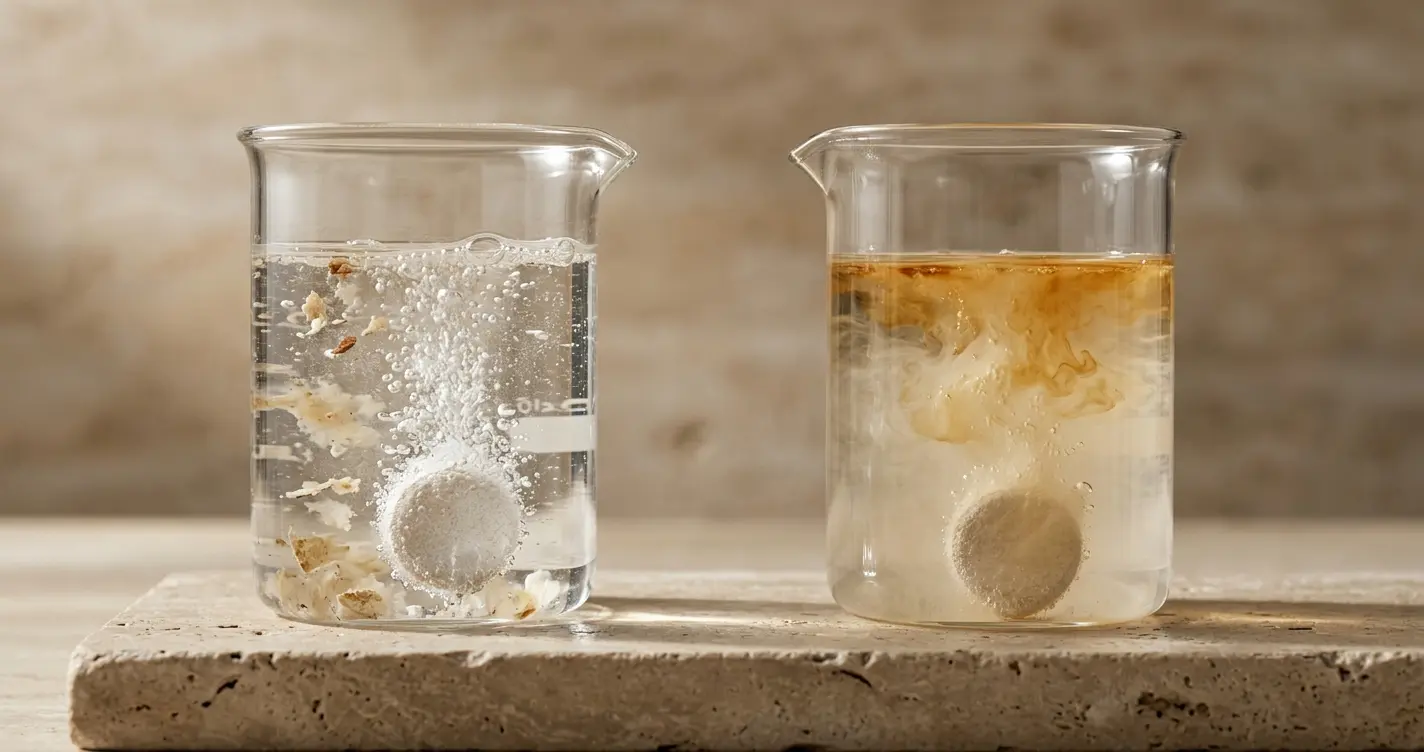
Una buona pastiglia detergente non è composta da un solo ingrediente. Combina un acido disincrostante con tensioattivi, così un solo ciclo affronta contemporaneamente due problemi distinti: la crosta minerale nel circuito dell'acqua e la pellicola oleosa lasciata dal caffè.
In pratica, questo significa meno cicli di risciacquo, meno tempo di attesa e una macchina che torna a erogare alla temperatura corretta perché l'elemento riscaldante non è più isolato dal calcare. I risultati misurabili sono un riscaldamento più rapido, il ripristino della portata e l'eliminazione del sapore stantio e amaro causato dagli oli irranciditi.
Disincrostazione vs. sgrassatura: due problemi, una sola pastiglia
La maggior parte degli acquirenti tende a confondere questi aspetti, ma dal punto di vista chimico si tratta di interventi diversi. Il calcare è costituito da carbonato di calcio e magnesio depositato dall'acqua riscaldata. Si dissolve solo quando si abbassa il pH, motivo per cui richiede un acido.
Gli oli del caffè e il biofilm di cui si nutrono sono un problema completamente distinto. Si tratta di residui non polari che un acido riesce appena a intaccare. Hanno bisogno di tensioattivi che li sollevino e li emulsionino, così da essere eliminati con il risciacquo.
Questo è il motivo principale per cui l'aceto, usato come soluzione monofunzione, risolve solo metà del problema. L'acido acetico può intaccare il calcare, ma non fa praticamente nulla contro l'accumulo oleoso che riveste il portafiltro, i tubi e il gruppo erogatore. Una pastiglia a doppia azione è formulata per gestire entrambi nello stesso ciclo.
Panoramica delle prestazioni: pastiglie vs. alternative comuni
La tabella seguente confronta i quattro metodi a cui le persone ricorrono realmente, valutati in base ai fattori che contano nell'uso quotidiano.
| Metodo | Rimuove il calcare | Rimuove gli oli del caffè | Cicli di risciacquo necessari | Costo stimato per utilizzo | Sicuro per la macchina |
|---|---|---|---|---|---|
| Pastiglie per pulizia/decalsificazione | Sì | Sì | 1–2 | ~$0.30–0.60 | Sì (tamponato) |
| Aceto bianco | Parziale | No | 3–4 | ~$0.10 | Rischio per le guarnizioni nel tempo |
| Polvere di acido citrico | Sì | No | 2–3 | ~$0.15 | Sì |
| Liquido disincrostante proprietario | Sì | A volte | 2 | ~$0.50–1.00 | Sì |
La colonna del costo per utilizzo racconta una storia che molti trascurano. L’aceto sembra l’opzione più economica finché non si considerano i cicli di risciacquo aggiuntivi, l’acqua e il tempo che consumano, e gli oli che non rimuovono mai.
Dove le pastiglie mostrano i loro limiti
Non sono una soluzione miracolosa, e sostenere il contrario sarebbe poco onesto. Non tutte le pastiglie sono adatte a ogni macchina da caffè. Una pastiglia dimensionata per un serbatoio a goccia può essere il dosaggio sbagliato per una caldaia compatta per espresso, e forzare il formato errato in una macchina a capsule significa rischiare un’ostruzione.
Anche il dosaggio varia a seconda della macchina. Le caldaie per espresso contengono un piccolo volume d’acqua ad alta pressione, quindi la concentrazione conta più di quanto accada in una macchina a filtro che fa passare più tazze in un solo ciclo.
E nessun prodotto può annullare l’effetto della tua acqua. Se vivi in una zona con acqua davvero dura, dovrai decalcificare più spesso indipendentemente dalla qualità della pastiglia. La chimica può solo tenere il passo con il carico di minerali, non eliminarlo.
Perché scegliere le pastiglie per la pulizia della macchina da caffè invece dell’aceto
Questo è il dibattito più ricercato della categoria, quindi merita una risposta diretta anziché una scrollata di spalle. L’aceto non è inutile, ma è lo strumento sbagliato che si continua a usare per abitudine.
Perché l’aceto continua a essere usato (e perché rende meno)
Il motivo del suo fascino è evidente. È già in dispensa, costa quasi nulla e ogni nonna lo considerava infallibile. Sono vantaggi reali, ed è per questo che il dibattito tra aceto e pastiglie non si esaurisce mai.
Gli svantaggi sono meno evidenti finché non comportano un costo. L’acido acetico è aggressivo nei confronti delle guarnizioni in gomma e dei componenti in alluminio all’interno di molte macchine, e l’esposizione ripetuta può deteriorare le tenute, la cui sostituzione è tutt’altro che semplice. Inoltre lascia un odore che persiste per diversi risciacqui e non fa nulla contro l’accumulo di oli, quindi la tua macchina può essere priva di calcare e continuare comunque a preparare un caffè dal sapore stantio.
Acidi tamponati e perché la formulazione è importante
Ecco il dettaglio tecnico che distingue un vero decalcificante da un semplice spruzzo di acido domestico. Le compresse di qualità utilizzano in genere acido solfammico o citrico miscelato con tamponi di pH. Il tampone mantiene la soluzione sufficientemente efficace da sciogliere il calcare carbonatico, pur restando delicata sui metalli e sulle plastiche con cui entra in contatto.
Il dosaggio controllato è l'altra metà dell'equazione. Una compressa fornisce ogni volta una quantità nota di acido attivo, così la soluzione rientra intenzionalmente nell'intervallo efficace anziché per caso. Un versamento a mano libera di aceto può essere troppo debole per funzionare o abbastanza forte da danneggiare i componenti, e non si sa mai davvero quale dei due casi si verifichi.
Come pulire correttamente una macchina da caffè
Il metodo corretto dipende dalla macchina e sbagliarlo comporta uno spreco di prodotto o il rischio di danni. Adattare il protocollo al tipo di macchina è il punto in cui un po' di competenza fa la differenza.
Macchine a filtro, macchine per espresso e sistemi a capsule
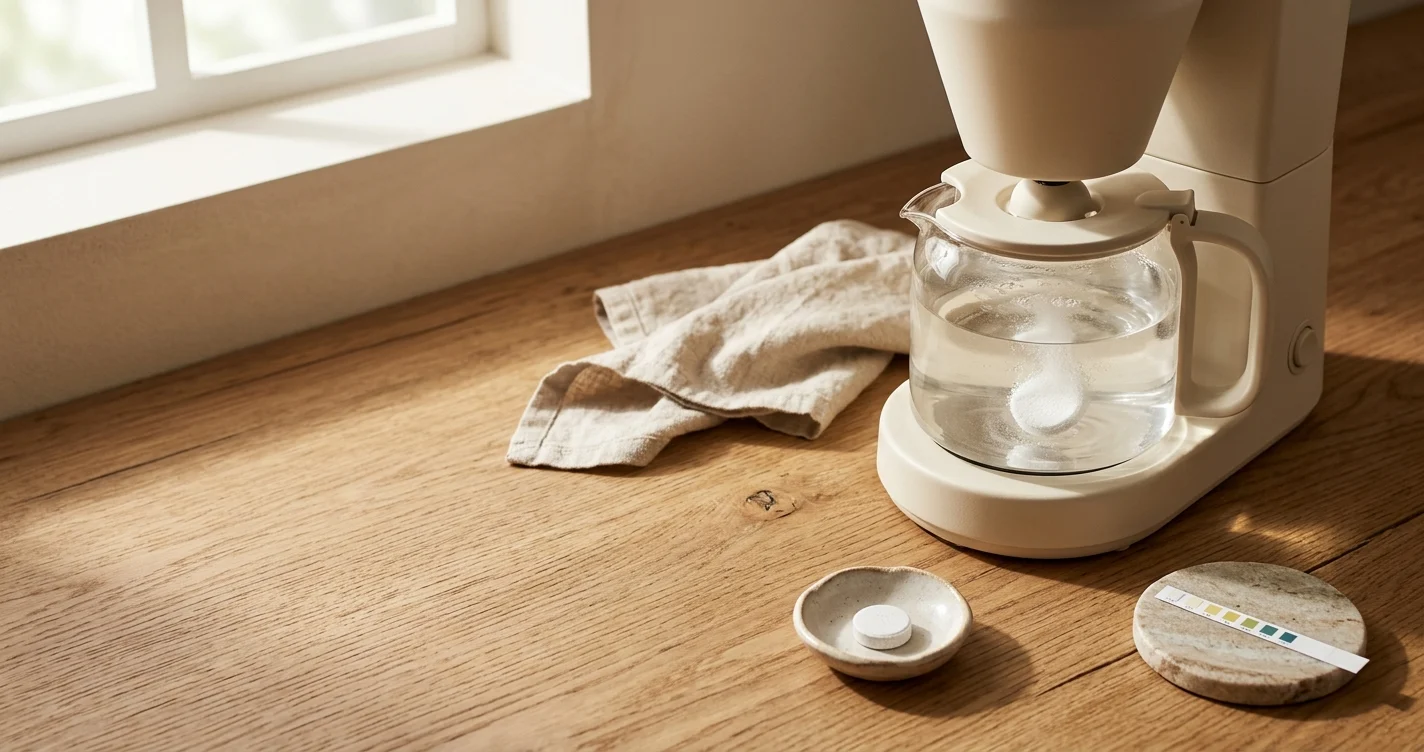
Ogni formato richiede un approccio diverso. Per una macchina a filtro, si scioglie il decalcificante nel serbatoio, si esegue un ciclo completo di erogazione senza filtro, si lascia agire, quindi si effettuano due cicli con acqua pulita per il risciacquo.
Le macchine per espresso sono più esigenti. Le pastiglie per la pulizia delle macchine per espresso sono progettate per agire attraverso i gruppi erogatori e i portafiltri, spesso tramite una procedura di controlavaggio che rimuove gli oli accumulati nel gruppo caffè, seguita da una decalcificazione separata della caldaia.
I sistemi a capsule hanno le loro particolarità. Le Keurig cleaning tablets e altre pastiglie per sistemi a capsule sono formulate per raggiungere gli aghi di ingresso e uscita e il serbatoio, dove il calcare restringe silenziosamente il percorso del flusso finché la tazza non impiega il doppio del tempo per riempirsi.
Frequenza in base alla durezza dell'acqua
La frequenza di pulizia dovrebbe seguire le caratteristiche dell'acqua, non solo il calendario. La tabella seguente associa la durezza a un intervallo di decalcificazione appropriato.
| Durezza dell'acqua (ppm CaCO₃) | Esempio di area geografica | Frequenza di decalcificazione consigliata |
|---|---|---|
| Dolce (0–60) | Costa nord-occidentale del Pacifico | Ogni 3 mesi |
| Moderata (61–120) | Midwest US | Ogni 6–8 settimane |
| Dura (121–180) | Southwest US | Ogni 4 settimane |
| Molto dura (180+) | Alcune zone di TX/AZ | Ogni 2–3 settimane |
Se non conosci la durezza dell'acqua nella tua zona, una striscia reattiva economica la determina in pochi secondi. Il punto è che una famiglia a Phoenix e una a Seattle seguono due diversi programmi di manutenzione su macchine identiche.
Realtà di Mercato: C'è spazio per vendere pastiglie detergenti?
Quindi il prodotto funziona. La domanda più interessante per chi legge questa analisi come opportunità di business è se valga la pena venderlo. La risposta breve è che questa è una delle categorie di prodotti di consumo più accessibili in cui un piccolo marchio può entrare.
Crescita della Categoria e Comportamento degli Acquirenti
Le pastiglie detergenti sono un prodotto di consumo, ed è questo il fatto commercialmente più importante. Le persone le acquistano ripetutamente, con una frequenza determinata dalla durezza dell'acqua, il che rende la categoria naturalmente adatta agli abbonamenti.
Il fattore che guida la domanda non è una moda passeggera. Le macchine da caffè espresso domestiche e le macchine a capsule si sono diffuse ampiamente fino alla metà degli anni 2020, e ognuna di queste macchine richiede manutenzione per tutto il tempo in cui resta sul piano cucina. Questo è l'aspetto utile: un anticalcare per macchine da caffè si basa sulla base installata di hardware, non su cicli di tendenza che hanno un picco e poi svaniscono.
Margini, Riacquisto e Opportunità a Marchio Privato
La logica commerciale è semplice. Il costo unitario è basso, il valore percepito è alto perché il prodotto protegge un elettrodomestico che vale molto più della pastiglia, e il riacquisto è intrinseco.
Anche la concorrenza dei marchi è meno intensa di quanto ci si potrebbe aspettare in molti mercati regionali e nicchie dei marketplace. Questa combinazione rende le pastiglie anticalcare per macchine da caffè uno SKU di ingresso sensato per i rivenditori, per i marchi di elettrodomestici che desiderano un accessorio complementare e per i servizi di abbonamento al caffè che vogliono aggiungere margine senza aumentare la complessità.
Cosa valutano gli acquirenti
Ottenere spazio a scaffale o una posizione nei marketplace dipende da una manciata di criteri. Gli acquirenti cercano innanzitutto la certificazione alimentare, perché il prodotto entra in contatto con il circuito dell'acqua di qualcosa da cui le persone bevono.
Successivamente, valutano le dichiarazioni sulla biodegradabilità, un’etichettatura chiara della compatibilità per drip, espresso o capsule e un packaging che comunichi il dosaggio a colpo d’occhio. Sono questi gli elementi distintivi che determinano il posizionamento più spesso del prezzo.
Portare sul mercato il proprio brand di pastiglie detergenti
Se intravede l’opportunità, la domanda successiva è pratica: come si fa concretamente a realizzare una pastiglia e a portarla sugli scaffali? È qui che entrano in gioco approvvigionamento e produzione, ed è meno complesso di quanto sembri quando un partner gestisce l’aspetto tecnico.
Dalla formula al prodotto finito: cosa copre l’OEM/ODM
Un partner OEM/ODM competente si occupa degli aspetti che altrimenti rallenterebbero un imprenditore. Ciò include l’ottimizzazione della formulazione per ottenere il giusto equilibrio tra acidi e tensioattivi, la compressione delle pastiglie, il packaging e la documentazione di conformità richiesta da autorità di regolamentazione e marketplace.
Questo le consente di concentrarsi su brand e distribuzione, che sono gli ambiti in cui una nuova attività compete realmente. Non sta allestendo un laboratorio chimico o una linea di compressione; sta scegliendo posizionamento, canali e clienti.
Una personalizzazione in linea con il suo posizionamento
Le leve di personalizzazione sono ciò che impedisce a una linea private label di apparire generica. Dimensioni e dosaggio delle pastiglie possono essere calibrati per diversi tipi di macchina, così un brand focalizzato sull’espresso e uno focalizzato sulle capsule ottengono ciascuno il prodotto giusto.
Anche il formato è flessibile. Può scegliere pastiglie effervescenti che si dissolvono rapidamente o versioni compatte che ottimizzano lo stoccaggio, proporre formulazioni senza profumo o eco per gli acquirenti che le ricercano e racchiudere il tutto in un packaging private label che riporti il suo nome anziché quello di una fabbrica.
Testare il mercato senza esporsi troppo
La vera preoccupazione per la maggior parte degli imprenditori è l’inventario. Ordinare diecimila unità di un prodotto non ancora testato è il modo in cui un’idea promettente si trasforma in un garage pieno di scorte che non riesce a movimentare.
Una quantità minima d’ordine ridotta risolve questo problema. Le consente di validare la domanda, testare i messaggi e affinare il posizionamento con un primo lotto contenuto, per poi passare a una produzione più ampia quando gli ordini lo giustificano. Impegna capitale reale solo dopo che il mercato le ha dato un riscontro.
Conformità e velocità di immissione sul mercato
Le attività normative sono il punto in cui i lanci spesso si bloccano silenziosamente a causa dei ritardi. La documentazione sulla sicurezza per il contatto con gli alimenti e le certificazioni specifiche per area geografica possono richiedere mesi se si parte da zero.
Affidare questa base a un produttore che possiede già la documentazione necessaria riduce drasticamente i tempi. Il tuo prodotto arriva sugli scaffali e nei marketplace mentre un concorrente meno preparato è ancora in attesa di un rapporto di laboratorio.
Collabora con un produttore progettato sia per piccoli test sia per la scalabilità
Tutto quanto sopra conta solo se il partner che c’è dietro è davvero in grado di garantire la consegna a entrambe le estremità dello spettro dei volumi. Questo è il vantaggio concreto di lavorare con uno stabilimento progettato per un’ampia gamma produttiva, anziché per una sola dimensione d’ordine.
Il nostro stabilimento opera su 40,000 square meters con più di una dozzina di linee di produzione, il che significa che sia un primo lotto di prova prudente sia un riordino a pieno volume sono qui procedure ordinarie, non eccezioni. La gestione completa della conformità è inclusa, quindi la parte relativa a certificazioni e documentazione è coperta invece di essere lasciata a te.
Se preferisci verificarlo di persona anziché fidarti sulla parola, sei sinceramente il benvenuto a visitare la fabbrica e osservare la produzione in prima persona prima di prendere qualsiasi impegno. Vedere le linee e i controlli qualità dal vivo tende a rispondere alle domande a cui una scheda tecnica non può dare risposta.

Pronto a lanciare la tua linea di pastiglie detergenti?
Se i numeri tornano anche per te come tornano per noi, il passo successivo è semplice. Richiedi campioni per testare personalmente il prodotto, confrontati su una formulazione personalizzata pensata per le macchine e gli acquirenti che vuoi servire, oppure inizia con un lotto a basso MOQ per validare il mercato prima di espanderti.
E se vuoi vedere dove verrebbe realizzato il tuo prodotto, vieni a visitare la fabbrica. Contattaci per discutere del tuo progetto private-label e ti aiuteremo a passare dall’idea a un marchio pronto per lo scaffale senza dover sostenere il rischio da solo.
Domande frequenti
D: Le pastiglie detergenti sono sicure per tutte le macchine da caffè?
R: La maggior parte delle pastiglie di qualità è sicura per macchine a filtro, espresso e a capsule, perché utilizza acidi tamponati che proteggono i componenti in metallo e plastica. L’aspetto da considerare riguarda dosaggio e formato: una pastiglia dimensionata per un serbatoio di una macchina a filtro potrebbe non essere adatta a una piccola caldaia per espresso, e le macchine a capsule richiedono pastiglie progettate per i loro aghi stretti e il percorso del flusso. Verifichi sempre le indicazioni del produttore per la sua specifica macchina prima del primo ciclo.
D: In che modo le pastiglie decalcificanti si differenziano da un decalcificante liquido per macchine da caffè?
R: Le principali differenze riguardano la precisione del dosaggio e la conservazione. Una pastiglia fornisce ogni volta una quantità fissa e nota di principio attivo, eliminando l’incertezza della misurazione di un liquido. Le pastiglie sono anche più leggere, più compatte e meno soggette a fuoriuscite, il che le rende più facili da conservare e spedire, un vantaggio importante tanto per chi le rivende quanto per chi le utilizza.
D: Posso usare una sola pastiglia sia per la decalcificazione sia per lo sgrassaggio?
R: Sì, se la pastiglia è una formulazione a doppia azione che combina un acido decalcificante con tensioattivi. Questi agiscono su calcare e oli del caffè in un unico ciclo, ed è proprio questo il principale vantaggio. Prodotti separati hanno comunque senso per le configurazioni professionali per espresso, dove gli operatori utilizzano spesso un detergente dedicato per il controlavaggio del gruppo erogatore e un decalcificante separato per la caldaia, così da intervenire su ciascun problema con precisione.
D: Qual è la durata di conservazione delle pastiglie detergenti per macchine da caffè?
R: Le pastiglie formulate e confezionate correttamente rimangono in genere stabili per circa due o tre anni se conservate in un luogo asciutto e ben sigillate. L’umidità è il principale nemico, poiché le pastiglie effervescenti e a base acida possono iniziare a reagire o deteriorarsi se esposte all’umidità. Per i rivenditori, questa durata di conservazione lunga e stabile rappresenta un reale vantaggio, perché riduce il rischio di giacenze invendute rispetto ai beni deperibili.
D: Quali certificazioni dovrei cercare quando acquisto pastiglie da rivendere?
R: Inizi con la documentazione relativa alla sicurezza alimentare o al contatto con gli alimenti, poiché il prodotto entra nel circuito dell’acqua di una macchina per bevande. Oltre a questo, gli acquirenti si aspettano sempre più marchi di conformità specifici per le regioni dei mercati in cui vende, oltre a eventuali certificazioni di biodegradabilità o ecologiche se intende posizionare il brand in questo modo. Una documentazione chiara e verificabile è ciò che le consente di soddisfare sia i buyer della distribuzione sia i requisiti di inserzione nei marketplace.