
Se ultimamente hai scorso video dedicati alle pulizie, probabilmente hai visto qualcuno strofinare una pastiglia per lavastoviglie su uno sportello del forno unto e far apparire sotto un vetro splendente. Sembra quasi fin troppo facile. Ma funziona davvero, oppure è solo montaggio ben fatto?
La versione breve: sì, funziona davvero per molto grasso quotidiano. Ma come qualsiasi trucco, ha dei limiti che vale la pena conoscere prima di iniziare a strofinare. Ecco una guida pratica e chiara su cosa una pastiglia per lavastoviglie può e non può fare per il tuo forno.
Perché Questo Trucco di Pulizia È Improvvisamente Ovunque
Il trucco della pastiglia per lavastoviglie per il forno si è diffuso rapidamente perché unisce perfettamente convenienza, soddisfazione e facilità di condivisione. Una porta sporca che torna limpida con poche passate crea il classico video prima-e-dopo perfetto, e questo tipo di contenuto tende a diffondersi bene sulle piattaforme social.
Anche chi si occupa delle pulizie domestiche apprezza un consiglio che utilizza qualcosa già presente in dispensa. Nessun prodotto da ordinare appositamente, nessuna corsa al negozio. Basta prendere una pastiglia che hai già acquistato per la tua lavastoviglie.
Il Vantaggio: Economico, Semplice e Già nella Tua Dispensa
Gli spray commerciali per il forno spesso comportano fumi intensi, avvertenze sulla ventilazione e un prezzo adeguato. Il metodo della pastiglia evita gran parte di tutto questo. Una pastiglia costa pochi centesimi e l'odore è delicato rispetto ai detergenti schiumogeni caustici.
Richiede anche poco impegno. Non stai ricoprendo l'intero forno di sostanze chimiche e aspettando per ore. Per il grasso ordinario, una pastiglia umida e pochi minuti di pulizia fanno il loro dovere.
Cosa Fa Davvero la Pastiglia
Le pastiglie per lavastoviglie sono progettate per scomporre cibo e grasso a livello molecolare. Contengono agenti alcalini delicati ed enzimi sgrassanti pensati per rimuovere i residui incrostati dai piatti, che non sono poi così diversi dallo sporco del tuo forno.
La pastiglia solida, leggermente ruvida, agisce anche come un delicato blocco abrasivo quando viene inumidita. In questo modo ottieni l'azione combinata della chimica detergente e di una leggera abrasione, ed è per questo che sembra sorprendentemente efficace.
Come Funziona il Metodo dell'Acqua Calda e della Pastiglia per Lavastoviglie
La tecnica di base si fonda su un'idea semplice: il calore ammorbidisce il grasso. Quando immergi una pastiglia in acqua calda e la strofini su una superficie sporca, il calore allenta lo strato indurito mentre i principi attivi della pastiglia iniziano a disgregarlo.
Questa combinazione significa che non fai affidamento sulla sola forza. Lasci che la chimica e il calore facciano gran parte del lavoro, poi una leggera passata finale completa il risultato.
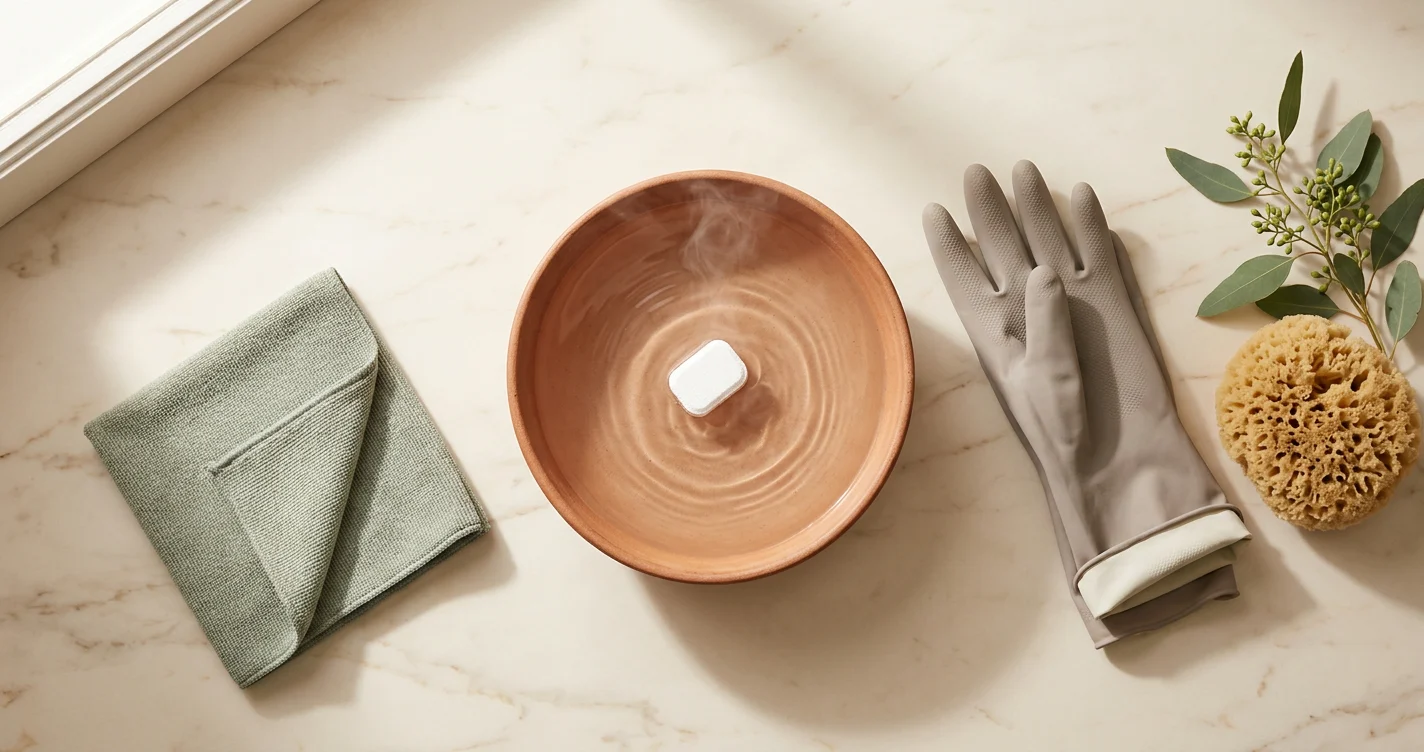
Cosa ti servirà prima di iniziare
Una pastiglia per lavastoviglie (i tipi con polvere sono particolarmente efficaci)
Una ciotola di acqua calda, ma non bollente
Guanti di gomma per proteggere le mani
Un panno non abrasivo o una spugna morbida
Un panno in microfibra asciutto per la lucidatura finale
Passo dopo passo: la pulizia di base
Immergi la pastiglia in acqua calda per alcuni secondi, in modo che la superficie si ammorbidisca leggermente.
Strofina la pastiglia umida direttamente sulla superficie interna unta esercitando una pressione costante e uniforme.
Lavora su piccole sezioni in modo che la soluzione resti attiva e non si asciughi.
Rimuovi lo sporco sciolto con il panno umido.
Ripassa sulle macchie più ostinate e ripeti finché la superficie non è pulita.
Pulizia del vetro del forno con una pastiglia per lavastoviglie, passo dopo passo
Il vetro della porta è la parte che interessa di più alla maggior parte delle persone, soprattutto perché è quella che si vede davvero. Quella patina marrone e opaca si accumula nel tempo a causa degli schizzi che si cuociono sulla superficie, ed è la parte più soddisfacente da trattare.
Rimozione del grasso incrostato dal vetro del forno
Inizia con una pastiglia calda e umida e strofinala sul vetro freddo con lenti movimenti circolari. Il movimento circolare aiuta il leggero abrasivo a rimuovere la patina in modo uniforme invece di lasciare aloni irregolari.
Per gli accumuli più spessi, lasciala agire per un po'. Lascia i residui inumiditi sul vetro per cinque-dieci minuti, così il grasso ha il tempo di sciogliersi prima di ripassare sulla superficie.
Mantieni una pressione decisa ma controllata. Deve essere la superficie piatta della pastiglia a fare il lavoro, non il bordo più duro che insiste su un solo punto.
Lucidatura per una finitura senza aloni
Una volta rimossa lo sporco, risciacqua il vetro con acqua pulita usando un panno pulito per eliminare eventuali residui. Saltare questo passaggio è il motivo principale per cui il vetro si asciuga opaco.
Concludi con un panno in microfibra asciutto, lucidando finché la superficie non è perfettamente trasparente. Il passaggio a secco è ciò che ti garantisce un risultato senza aloni e limpido.
Pulizia delle griglie del forno con una pastiglia per lavastoviglie
Le griglie sono di solito il lavoro più sporco di tutto il forno. Raccolgono gocce e grasso carbonizzato in ogni angolo, e sono scomode da pulire a mano. È qui che la pastiglia dimostra davvero la sua utilità.
L'approccio dell'ammollo preventivo
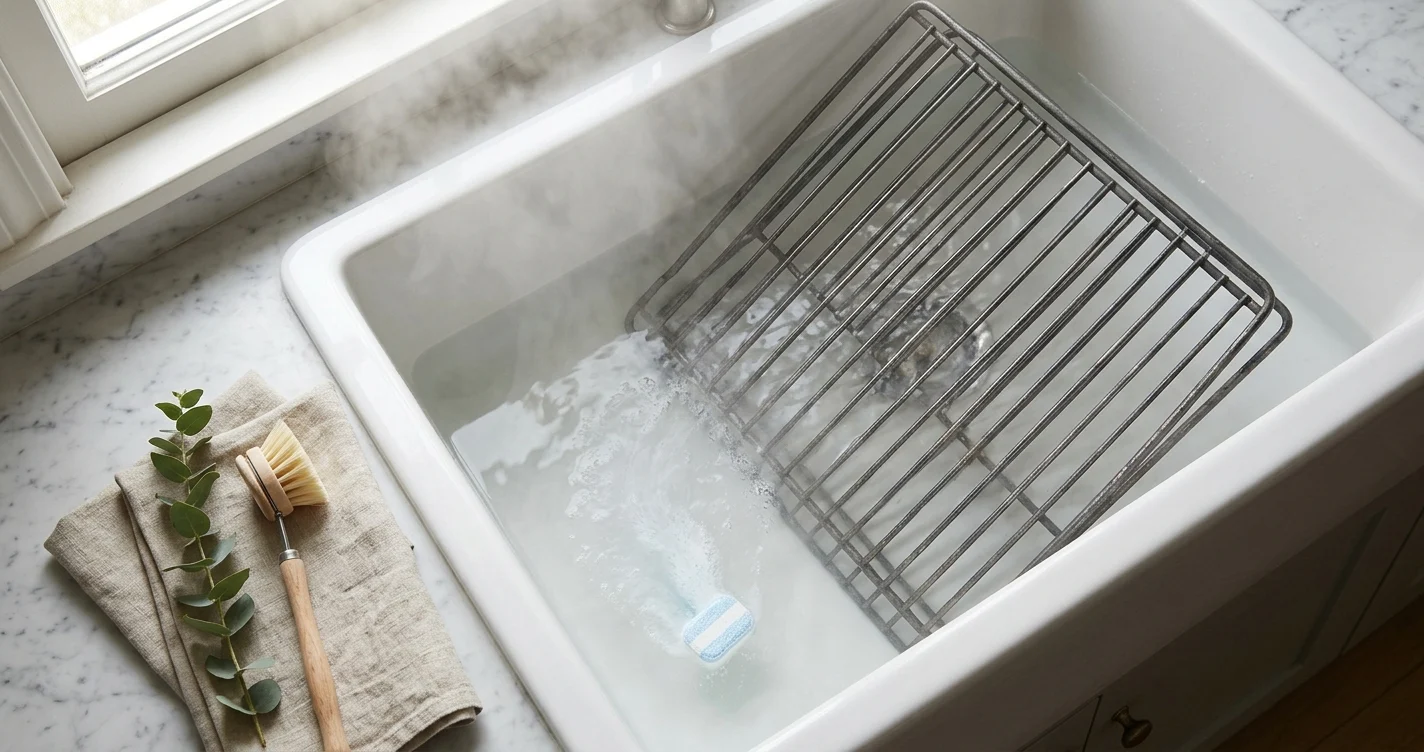
Prima di strofinare, lascia le griglie in ammollo. Sistemale in una vasca, in un lavello grande o in un vassoio profondo riempito con acqua calda e aggiungi una o due pastiglie da lasciare sciogliere.
Lasciale in ammollo per almeno 30 minuti, o più a lungo in caso di sporco ostinato. L'ammollo ammorbidisce il grasso incrostato, così la fase di strofinamento richiede una frazione dello sforzo.
Come raggiungere angoli e fessure
Per i punti stretti in cui le griglie si incrociano o si piegano, usa il bordo di una pastiglia umida per agire direttamente sullo sporco. Un vecchio spazzolino da denti immerso nella stessa soluzione calda con la pastiglia è perfetto per le fessure che il panno non pu' raggiungere.
Procedi metodicamente lungo ogni barra, quindi risciacqua accuratamente le griglie e asciugale prima di farle scorrere nuovamente all'interno.
Dove questo trucco mostra i suoi limiti
Vale la pena essere sinceri sui limiti, così da non ritrovarti frustrato. Il metodo della pastiglia è ottimo per il grasso comune, ma non fa miracoli in ogni situazione.
Pesanti accumuli di carbonio e forni autopulenti
Se il tuo forno presenta anni di spessi depositi di carbonio bruciato, una pastiglia da sola probabilmente non sarà sufficiente. Questi strati di solito richiedono un detergente specifico ad alta efficacia o una pulizia profonda adeguata.
E se possiedi un forno autopulente, in genere non hai affatto bisogno di questo trucco per l'interno. Il ciclo integrato si occupa della cavità principale, quindi riserva il trucco della pastiglia al vetro dello sportello e alle griglie.
Superfici e finiture da evitare
Fai attenzione in presenza di interni rivestiti, verniciati o con finiture speciali. La lieve abrasione che aiuta sul vetro può opacizzare o graffiare le superfici delicate.
Se il tuo forno ha un rivestimento antiaderente o smaltato con istruzioni di manutenzione specifiche, segui prima quelle. In caso di dubbio, prova su una piccola area nascosta prima di procedere con l'intera superficie.
Come si confronta con altri rimedi naturali per pulire il forno
La pastiglia per lavastoviglie non è l'unica opzione pratica disponibile. Molte persone si affidano ai prodotti base della dispensa, quindi ecco come si confronta con i rimedi naturali più popolari per pulire il forno.
Pastiglia vs. pasta di bicarbonato di sodio
| Fattore | Pastiglia per lavastoviglie | Pasta di bicarbonato di sodio |
|---|---|---|
| Impegno | Ridotto, principalmente passare un panno | Maggiore, richiede applicazione e tempo di attesa |
| Costo | Centesimi per pastiglia | Molto economico |
| Ideale per | Porte in vetro e griglie | Intero interno, lavori notturni |
| Velocità | Rapido per il grasso leggero | Lento, spesso lasciato agire durante la notte |
La pasta di bicarbonato di sodio, spesso abbinata a uno spray all’aceto, è fantastica per un ammollo notturno dell’intera cavità. La pastiglia è più veloce e ordinata per interventi mirati come la porta.
Quando scegliere invece un detergente commerciale
Per forni seriamente trascurati, un detergente acquistato in negozio resta comunque l’opzione più efficace. Questi prodotti sono formulati per sciogliere il carbonio duro con cui i metodi naturali fanno fatica.
Scegline uno quando hai a che fare con un accumulo nero e spesso, un forno che emette fumo o sporco che semplicemente non si smuove dopo un paio di tentativi. Basta aprire una finestra e indossare i guanti.
Consigli per la sicurezza e l'uso intelligente
Le pastiglie per lavastoviglie sono prodotti detergenti concentrati, anche se possono sembrare delicate. Alcune semplici precauzioni rendono il lavoro sicuro e il forno pronto per cucinare.
Indossa i guanti e risciacqua bene
Indossa sempre guanti di gomma, poiché gli agenti alcalini possono irritare o seccare la pelle con il contatto ripetuto. Tieni la pastiglia lontana anche dagli occhi.
Il risciacquo è altrettanto importante. Qualsiasi residuo rimasto deve essere rimosso con acqua pulita prima di cucinare di nuovo, così nulla si trasferirà al cibo. Un ultimo passaggio con un panno umido completa perfettamente l'operazione.
Conservare le pastiglie lontano da bambini e animali domestici
Quelle pastiglie colorate possono sembrare caramelle a un bambino o a un animale domestico curioso, ma contengono sostanze chimiche concentrate che sono pericolose se ingerite. Conservale in alto o in un armadietto con chiusura di sicurezza.
Tienile nella loro confezione originale in modo che le informazioni di sicurezza restino con esse e non lasciare mai una pastiglia sfusa sul piano di lavoro.
Domande frequenti
D: Una pastiglia per lavastoviglie graffierà il vetro del mio forno?
R: Se usata correttamente, no. Usa il lato piatto della pastiglia con una pressione leggera e uniforme e andrà tutto bene. Evita di premere il bordo duro contro il vetro, perché è questo che potrebbe lasciare un leggero graffio.
D: Per quanto tempo devo lasciare la pastiglia sul grasso?
R: Per il grasso leggero, è sufficiente una rapida passata e una pulizia immediata. Per gli accumuli pesanti e incrostati, lascia agire il residuo inumidito per cinque-dieci minuti, così avrà il tempo di ammorbidirsi prima di strofinare di nuovo.
D: Posso usare qualsiasi marca di pastiglia per lavastoviglie?
R: La maggior parte va bene, ma il tipo conta più della marca. Le pastiglie in polvere solida o compresse offrono la delicata azione abrasiva che rende efficace questo trucco. Le pastiglie in gel si dissolvono troppo rapidamente e non offrono la stessa superficie da strofinare.
D: È sicuro usarla sulla resistenza o sulla ventola?
R: No, mantieni queste aree asciutte. Non applicare mai acqua o una pastiglia bagnata direttamente sulla resistenza esposta o sulla ventola, poiché l’umidità attorno ai componenti elettrici rappresenta un pericolo. Concentrati solo su sportello, pareti, fondo e griglie.
D: Con quale frequenza dovrei pulire il forno in questo modo?
R: Una rapida pulizia dello sportello ogni due settimane impedisce allo sporco di depositarsi. Una pulizia più completa delle griglie e dell’interno una volta al mese è una cadenza ragionevole per la maggior parte delle famiglie ed evita di dover ricorrere a una pulizia profonda impegnativa.