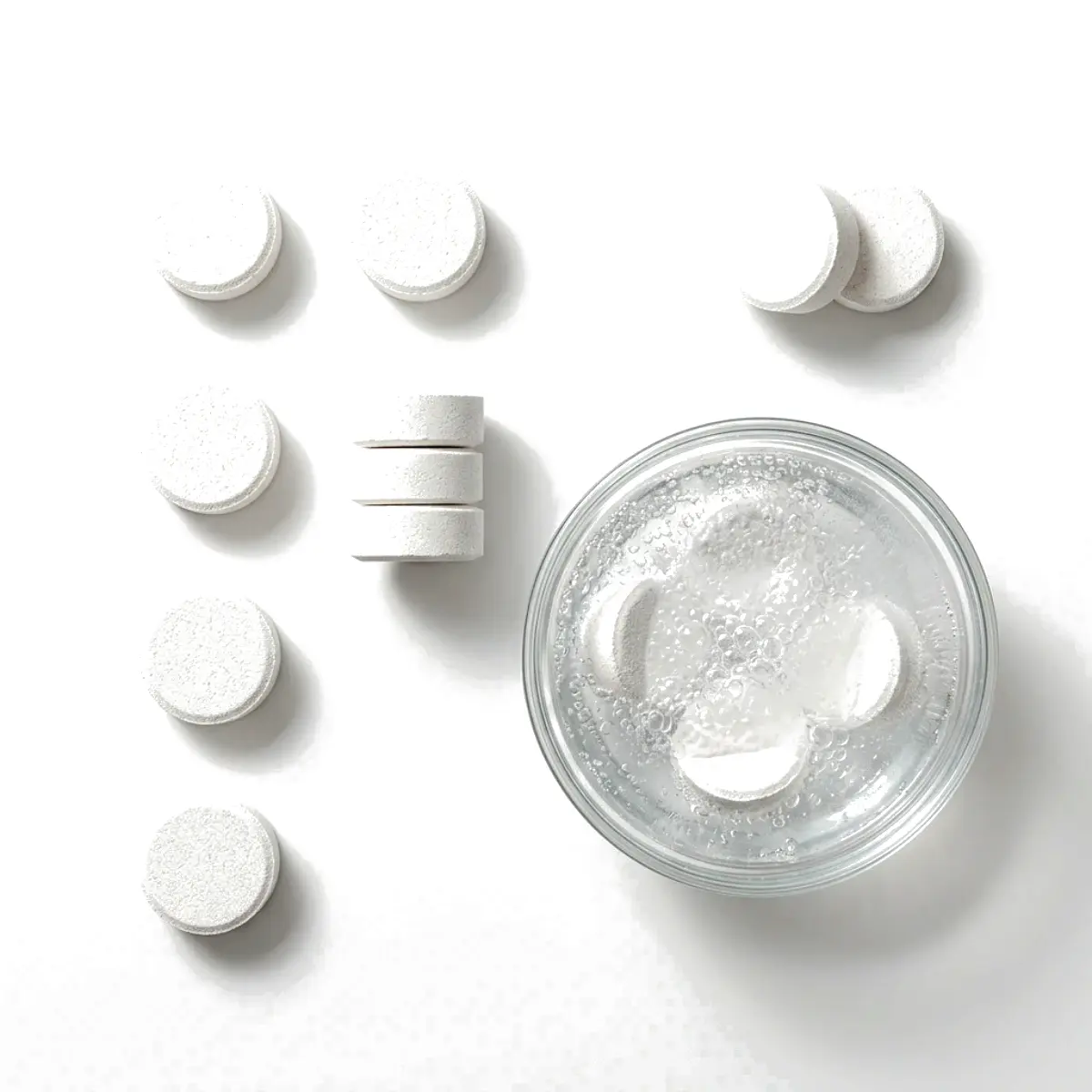

If you've ever opened a jar of effervescent cleaning tablets, dishwasher tabs, denture cleaners, or bath bombs and found them cracked, puffed up, or fused into one stubborn lump, there's usually a short explanation: moisture got in, the temperature went up and down, or the formula and compression weren't balanced for the real world. These three failure modes hit consumers (ruined products), retailers (returns and shelf complaints), and private-label buyers (whole shipments going soft before they even reach the store).
It matters because a tablet is a tiny, pressurized chemistry experiment waiting for water. When air moisture reaches it too early, the reaction it was designed for starts without you. Below is a plain-language breakdown of why it happens — and how to stop it.
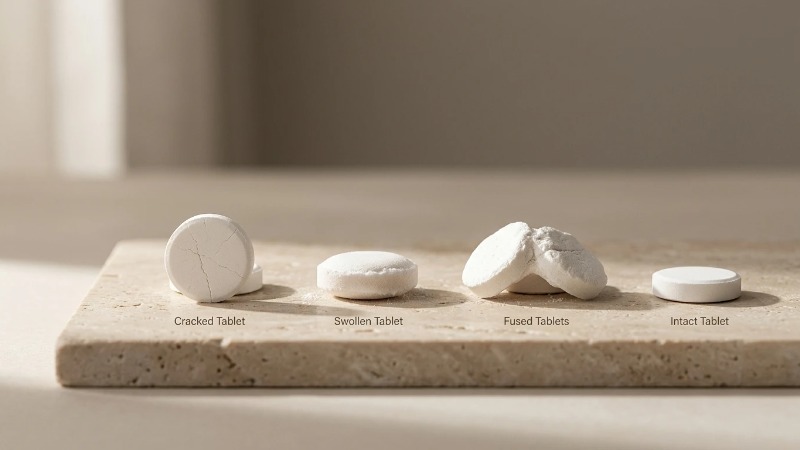
- Cracking comes from stress — humidity swings or too much compression force during manufacturing.
- Swelling is early effervescent moisture absorption from the air before use.
- Sticking together is heat plus leftover moisture softening tablet surfaces.
- Cool, dry, sealed storage fixes most problems on the consumer side.
- True durability starts earlier — in formulation, drying, and barrier packaging.
- Climate and shipping conditions decide whether a product survives a global supply chain.
The Short Answer: Moisture, Pressure, and Chemistry
All three problems trace back to the same trio of causes: ambient humidity reaching the tablet, the internal balance between binder and compression, and the temperature it's stored at. Get those three right and a tablet stays hard, dry, and separate. Get one wrong and you'll see cracks, swelling, or clumping — sometimes all three in the same jar.
Quick-Reference Breakdown of the Three Problems
| Symptom | Most Common Trigger | What's Actually Happening |
|---|---|---|
| Cracking | Humidity swings / over-dry air | Expansion and contraction stress |
| Swelling | Moisture absorption | Early effervescent reaction |
| Sticking together | Heat + residual moisture | Surface softening and re-bonding |
What's Actually Inside a Cleaning Tablet (And Why It Reacts)
Most effervescent-style tablets share a short list of ingredients: an acid (often citric acid), a carbonate or bicarbonate (usually sodium bicarbonate), a binder that holds everything together, surfactants for cleaning power, and sometimes fragrance oils or colorants. Each one plays a role — and each one reacts to its environment differently.
The Role of the Effervescent Pair
The fizz you want in water comes from acid meeting carbonate. In the presence of liquid, they release carbon dioxide — that's the bubbling. The catch is that any water will trigger this, including the humidity floating around your bathroom or warehouse. When airborne moisture reaches the tablet, the reaction quietly begins early, long before the product hits a bowl of water.
Binders, Fillers, and Why Compression Matters
Binders keep the powder from falling apart, and the compression force on the tablet press decides how hard the finished tablet is. There's a sweet spot. Too little pressure and the tablet is crumbly; too much and you get hidden fracture lines. Getting tablet hardness right is one of the quiet battles of manufacturing — compression defects don't always show on day one, but they surface after a few weeks of handling and shipping.
Why Cleaning Tablets Crack
Cracking is almost always a stress story. Something made the tablet expand or contract unevenly, and the structure gave way along its weakest line.
Humidity Swings and Internal Stress
When a tablet moves between a humid environment and a dry one — say, a steamy bathroom in the morning and a bone-dry air-conditioned room by afternoon — the outer layer absorbs and releases moisture faster than the core. That mismatch creates internal tension. Repeat the cycle enough times and surface cracks appear.
Over-Compression or Capping Defects
"Capping" is a term from tablet production: the top of a tablet shears off like a little cap. It usually means air got trapped during compression or the pressure was too high for the formula. In quality control, technicians check for this with hardness tests and visual inspection on sampled batches. A tablet that passes on the line but crumbles in transit often has one of these hidden defects.
Fragrance Oils and Brittleness
Scented tablets and bath bombs carry fragrance oils, and oil behaves differently from dry powder. Too much oil, or uneven drying, can leave the tablet either greasy and soft in spots or brittle and prone to flaking. Balancing fragrance load against structural integrity is one of those details that separates a good formula from a frustrating one.
Why Cleaning Tablets Swell
Swelling means the reaction already started. The tablet grew because gas and moisture are building up inside it.
Effervescent Tablet Moisture Absorption Explained
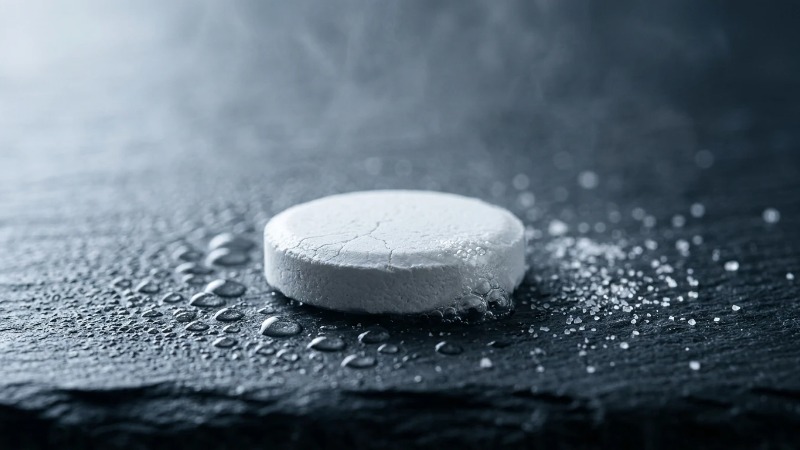
Here's the core mechanism: effervescent tablet moisture absorption happens when water vapor in the air reaches the acid-base pair. Even a tiny amount is enough to kick off a slow reaction. Carbon dioxide forms, the tablet puffs, and the surface may feel slightly soft or chalky. By the time you notice swelling, some of the cleaning power has already been spent on thin air — literally.
Packaging That Failed to Seal
Packaging is the frontline defense, and not all of it is equal. Foil blister packs isolate each tablet individually and hold up best. Tubes and jars protect well if they stay sealed and often rely on a desiccant to pull in stray moisture. Humidity control in tablet packaging is less about the container looking premium and more about whether its seal actually keeps vapor out over months on a shelf.
A Note on Climate and Shipping
For buyers serving North America, Europe, and the Middle East, geography complicates things. A pallet can pass through a humid coastal port, sit in a hot shipping container, and then land in a dry desert warehouse — all in one journey. Each stage nudges the tablet toward early reaction. Products that look fine leaving the factory can arrive swollen if the barrier packaging wasn't specified for that route.
Why Cleaning Tablets Stick Together
Heat Softening and Re-Bonding
Above a certain temperature, the surfaces of tablets soften slightly. In a bulk pack where tablets touch, those softened surfaces can bond as they cool — turning a loose bag into a single stuck block. Summer storage, hot garages, and un-cooled containers are the usual culprits.
Residual Moisture From Production
If tablets are packaged before they're fully dried, a small amount of residual moisture travels with them. That trapped moisture is enough to make neighboring tablets tacky and encourage clumping during transit. This is why controlled drying time before packaging isn't optional — it's part of the recipe for a product that survives.
Static and Surface Dust
A smaller contributor: fine surface powder and static cling can make tablets adhere lightly to each other. On its own it rarely ruins a batch, but combined with a little heat and moisture it accelerates sticking. Good surface finishing and dust extraction on the line help here.
Storage Conditions That Prevent All Three Problems
Most consumer-side problems disappear with better storage. The principle is simple: keep tablets cool, dry, and sealed.
Ideal Temperature and Humidity Ranges
Aim for a cool, stable spot away from steam and direct heat — a closed cabinet beats an open bathroom shelf, and an interior room beats a garage. For bath bomb storage conditions in particular, consistency matters more than any single number: a steady, dry environment prevents the expansion-contraction cycles that crack and swell tablets. If a space feels damp or swings hot and cold through the day, it's the wrong place.
A Simple Storage Comparison Table
| Storage Choice | Protection Level | Best For |
|---|---|---|
| Original sealed foil / blister | High | Long-term stock |
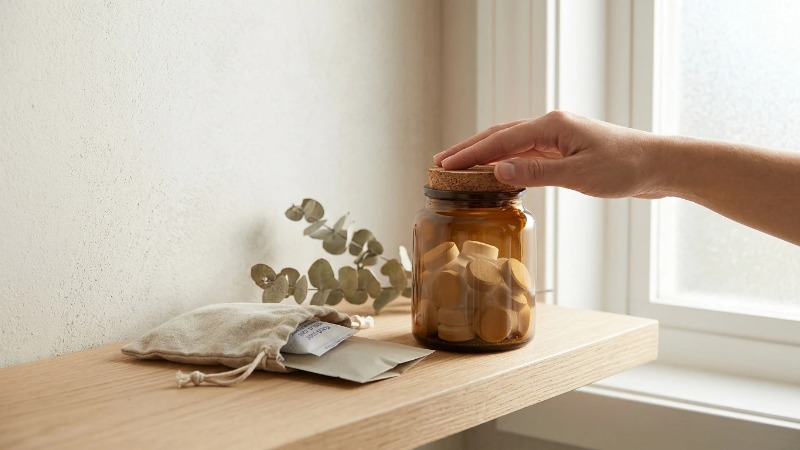
| Resealable airtight jar + desiccant | High | Opened packs |
| Open bathroom shelf | Low | Short-term, use quickly |
| Garage / warehouse with temp swings | Very Low | Not recommended |
What This Means for Brands and Private-Label Buyers
Storage advice helps the person at home. But if you're putting your name on a product, the problem shows up earlier — in formulation, drying, and packaging specs. A tablet that cracks in a customer's cabinet is often a tablet that was compressed wrong or dried too briefly months earlier.
Why Formulation and QC Are the Real Fix
The durable fix is a chain of small, correct decisions: a binder-to-compression balance that gives the right hardness without hidden fracture lines, controlled drying before packaging, and moisture-barrier packaging matched to the destination climate. Skip one link and the product fails somewhere between the line and the shelf. This is where a manufacturer's process discipline actually earns its keep.
Certifications and Process Controls That Reduce Defects
Process control is where credibility is proven, not promised. Facilities operating under GMP and ISO frameworks run documented checks on tablet hardness, drying, and batch moisture, and they manage production in humidity-controlled environments so the reaction doesn't start on the factory floor. For context, Boymay has focused on OEM/ODM personal care manufacturing since 1995, running 16 automated lines across a 40,000-square-meter facility with GMP, ISO, FDA, and SMETA certification — the kind of controlled setup that keeps defects rare rather than hoping to catch them later.
Key Takeaways
- Cracking = stress from humidity swings or over-compression.
- Swelling = moisture absorption starting the reaction early.
- Sticking = heat plus residual moisture.
- Sealed, cool, dry storage solves most consumer-side issues.
- Durable products start with correct formulation, drying, and barrier packaging.
- Climate and shipping conditions decide global shelf life.
A Quick Forward Look
Buyer expectations are rising, and the industry is responding with more moisture-resistant formulations, vegan and cleaner ingredient profiles, and smarter barrier packaging designed for long transit routes. As retailers push for products that look as good on arrival as they did leaving the plant, formulation and packaging engineering — not just marketing claims — are becoming the real competitive edge.
Looking to Develop Tablets Built to Survive the Shelf?
If you're a brand or retailer exploring OEM/ODM development, custom formulation, or packaging tuned for your target climate, we're happy to talk specifics — from binder and compression balance to barrier materials and samples (typically prepared in 7–14 days). Reach out to discuss your product and we'll help you build something that holds up all the way to your customer's shelf.
Frequently Asked Questions
Q: Are swollen or cracked cleaning tablets still safe to use?
A: In most cases a swollen or cracked tablet isn't a safety hazard, but its performance has likely dropped because part of the active reaction already happened in the air. Fizzing and cleaning power may be weaker. Always follow the product's own guidance, and if a tablet looks heavily degraded or discolored, replace it rather than risk a weak result.
Q: Does putting rice or a desiccant in the container really help?
A: Yes, a desiccant packet genuinely helps by absorbing stray moisture inside a sealed container, and it's the better choice. Uncooked rice offers a mild, improvised version of the same effect but is far less reliable and can shed starch dust. For opened packs, a proper silica-gel desiccant in an airtight jar is the practical fix.
Q: How long do cleaning tablets normally last before they degrade?
A: Shelf life varies widely by formula and packaging — individually foiled tablets generally hold up much longer than loose tablets in a frequently opened jar. The honest answer is that there's no single number; check the manufacturer's stated shelf life and treat opened packs as shorter-lived. Humidity exposure shortens any estimate.
Q: Why do my tablets clump only in summer?
A: Heat is the trigger. Warmer temperatures soften tablet surfaces slightly, and when they cool back down they re-bond to whatever they're touching. Add summer humidity and the clumping gets worse. Moving them to a cooler, drier spot usually solves it.
Q: Can manufacturers prevent these problems entirely?
A: They can reduce the risk dramatically through correct formulation, thorough drying, and the right barrier packaging — but no product is indestructible under extreme misuse, such as being left open in a steamy room for weeks. The realistic goal is a tablet engineered to survive normal shipping and storage, not one that defies physics.