
Scopri come trovare un fornitore di body mist in grado di mantenere la fragranza, spedire puntualmente e soddisfare i requisiti di conformità. Valuta le aziende di produzione conto terzi di body mist prima di effettuare il pagamento.
Una fondatrice con cui ho parlato l'anno scorso aveva fatto tutto ciò che riteneva giusto. Si era innamorata di una fiala campione che profumava di un giardino mediterraneo, aveva negoziato un prezzo ragionevole e aveva versato l'acconto per 8,000 unità. Sei settimane dopo che il lotto era arrivato nel suo magazzino, il mist era diventato leggermente torbido e la brillante nota di testa agrumata si era appiattita trasformandosi in qualcosa di saponoso. La fragranza sulla quale aveva costruito il lancio era scomparsa prima del primo riordino.
Ecco l'aspetto che la maggior parte delle guide all'approvvigionamento tende a trascurare: la decisione non riguardava quale laboratorio avesse il profumo migliore nella fiala. Riguardava quale fosse in grado di mantenere quella fragranza per un anno, spedire in una data vincolante e consegnare documenti in grado di superare il controllo di un funzionario doganale o una verifica di conformità da parte di un marketplace. Questa è la differenza tra un fornitore e un partner — ed è il punto centrale di questa guida.
Risposta rapida: cosa cercare in un produttore di body mist
Il produttore di body mist giusto combina la conformità normativa (registrazione FDA dello stabilimento cosmetico, dosaggio della fragranza conforme IFRA), una comprovata stabilità della formulazione, un MOQ adeguato alla fase in cui ti trovi, un preventivo che puoi esaminare riga per riga e tempi di consegna che sia in grado di garantire ufficialmente. Di seguito spieghiamo come verificare ciascun elemento prima che il denaro lasci il tuo conto.
La shortlist in 7 punti
- Conformità e certificazioni — GMP\/ISO 22716, registrazione FDA, dichiarazioni IFRA, SDS e dichiarazioni sugli allergeni.
- Capacità di R&D sulla formulazione — chimici interni, test di stabilità, competenza nei solubilizzanti.
- Adeguatezza del MOQ — una soglia adatta a un lotto di validazione, non a un salto nel buio.
- Trasparenza dei prezzi — ogni costo indicato separatamente, senza nasconderlo in un unico prezzo unitario.
- Tempi di consegna — documentati, basati sui dati storici e trasparenti sui colli di bottiglia stagionali.
- Opzioni di confezionamento & riempimento — qualità dell'attuatore, approvvigionamento dei flaconi, formati di riempimento.
- Comunicazione — rapidità e chiarezza delle risposte durante la fase di campionatura.
Cosa fa realmente un produttore di body mist (e cosa non fa)
Gli acquirenti perdono denaro confondendo i diversi tipi di contratto. Non tutte le aziende che si definiscono "produttori" svolgono lo stesso lavoro e le differenze tra loro sono il punto in cui la responsabilità viene meno.
Un formulatore sviluppa la ricetta — l’equilibrio tra olio profumato, solubilizzante, acqua, alcol e conservante. Un riempitore o miscelatore prende una formula esistente e la confeziona in flaconi; potrebbe non occuparsi affatto della chimica. Un partner OEM/ODM full-service svolge entrambe le attività: formula, esegue i test, approvvigiona i componenti, riempie, applica i tappi e le etichette, e consegna un’unità finita pronta per la vendita.
Perché è importante? Perché quando un lotto si separa, inizia lo scaricabarile. Se il formulatore e il riempitore sono due fornitori diversi, nessuno dei due si assume la responsabilità del problema. Un unico partner responsabile elimina questa lacuna. Quando valutate aziende di produzione conto terzi di body mist, chiedete chiaramente quale di questi tre ruoli ricoprono — e fatelo mettere per iscritto.
Body Mist vs. EDT vs. Profumo: perché la produzione è diversa
La concentrazione determina ogni aspetto della produzione di questi prodotti. Un body mist contiene in genere 1–3% di olio profumato. L’eau de toilette (EDT) si attesta intorno al 5–15%, mentre l’eau de parfum (EDP) varia dal 15–20%. Questo unico dato cambia completamente la complessità della formulazione.
Poiché un mist è composto principalmente da acqua e contiene una bassa percentuale di olio, la difficoltà principale consiste nel mantenere l’olio disciolto. Una quantità insufficiente di solubilizzante impedisce alla fragranza di incorporarsi completamente — il prodotto risulta torbido o presenta un anello superficiale. Una quantità eccessiva attenua la diffusione della fragranza e aumenta i costi. L’elevato contenuto d’acqua favorisce inoltre la proliferazione microbica, quindi la conservazione è molto più importante in un mist rispetto a un profumo ad alta concentrazione alcolica, che è essenzialmente autosterilizzante.
Chiunque può miscelare un profumo che il primo giorno ha un buon profumo. Realizzare un mist che rimanga trasparente, stabile e fedele alla fragranza per dodici mesi su uno scaffale di negozio caldo richiede una vera competenza nella formulazione — ed è proprio questo che distingue un laboratorio da un semplice riempitore di flaconi.
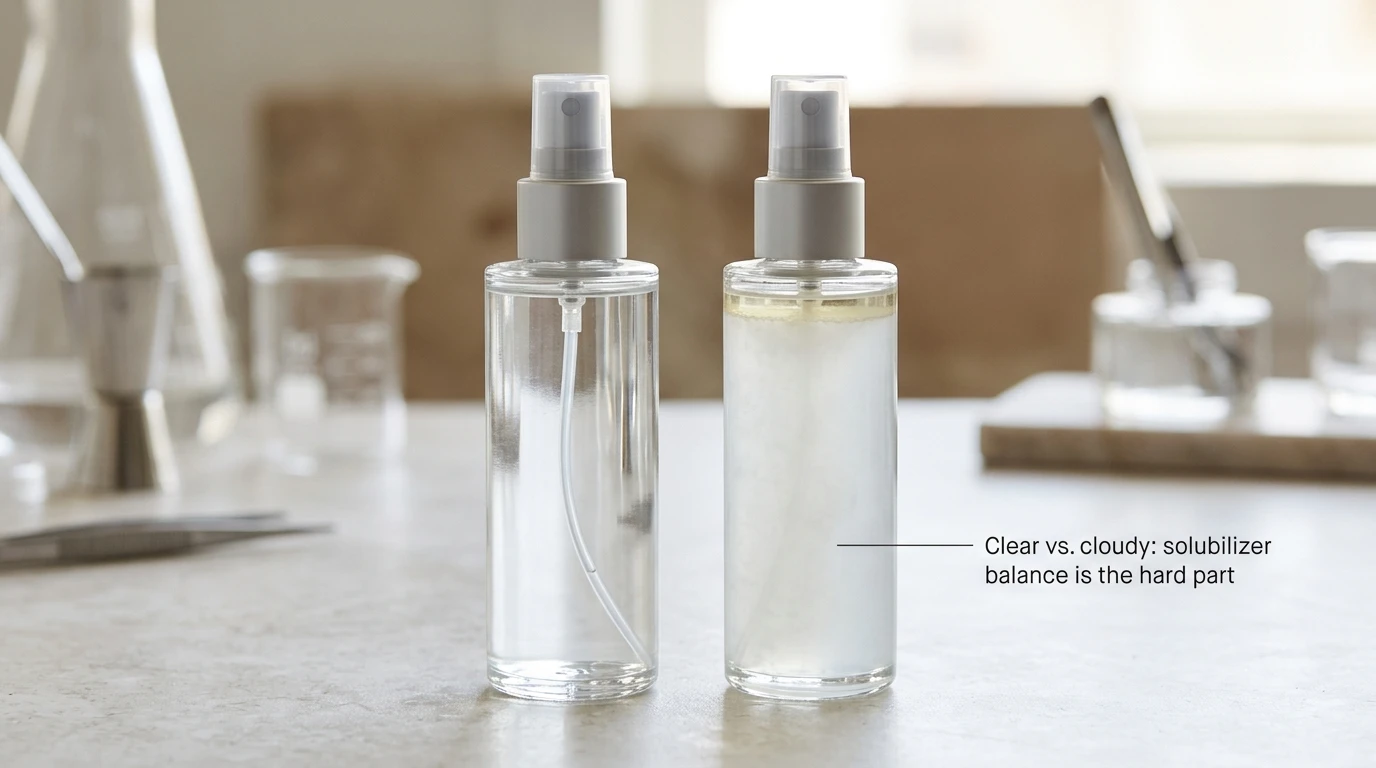
Private Label vs. Formulazione personalizzata vs. OEM
Esistono tre percorsi trasparenti per entrare sul mercato, ciascuno con compromessi concreti:
- Private label con formula standard — la soluzione più rapida ed economica. Scegli tra le fragranze già esistenti del produttore e apponi il tuo marchio. Lo svantaggio: il tuo concorrente nel punto vendita accanto potrebbe vendere un prodotto identico.
- Semi-personalizzato — parti da una formula di base e modifichi la fragranza, il colore o le dichiarazioni del prodotto. Un ragionevole compromesso tra costi e differenziazione.
- Produzione personalizzata di spray profumati partendo da zero — la tua fragranza, la tua proprietà intellettuale, una differenziazione completa. Costi più elevati e tempi più lunghi, ma nessun altro può vendere legalmente il tuo identico profilo olfattivo.
Se stai testando un concept, il private label ti consente di validarlo rapidamente. Se stai costruendo un brand destinato a durare, prevedi prima o poi un budget per la personalizzazione — la differenziazione è l'elemento fondamentale.
Perché scegliere il produttore sbagliato costa più di quanto pensi
Il prezzo unitario che negozi raramente è il fattore più oneroso. Il danno reale si manifesta sotto forma di resi, spedizioni bloccate e finestre di lancio mancate. Ecco dove vanno realmente i soldi quando un partner non mantiene gli standard promessi.
| Rischio | Cosa può andare storto | Impatto tipico sui costi |
|---|---|---|
| Svanimento della fragranza / instabilità | Le note di testa cedono in 4–8 settimane | Perdita dell'intero lotto + gestione dei resi |
| Formula torbida / separata | Rapporto di solubilizzante inadeguato | Ritardo nella riformulazione di 6–10 settimane |
| Lacune di conformità | Documentazione IFRA o sugli allergeni mancante | Blocco in dogana, rimozione dal marketplace |
| Incongruenza del MOQ | Obbligo di produrre un lotto da 10,000 unità | $8k–$25k di scorte invendute |
| Slittamento dei tempi di consegna | Finestra stagionale mancata | Ricavi del Q4 persi e non recuperabili |
Questi sono intervalli tipici del settore, non garanzie — ma qualsiasi responsabile acquisti esperto ne ha sperimentati almeno due in prima persona.
Come scegliere un produttore di body mist: il framework completo di valutazione
Segui questi passaggi nell'ordine in cui lo farebbe un responsabile acquisti professionista. La sequenza è importante — le non conformità bloccano un accordo prima ancora che il prezzo diventi rilevante.
Passaggio 1 — Verificare innanzitutto conformità e certificazioni
Non chiedere "siete certificati?" A questa domanda rispondono sempre di sì. Chiedi invece di inviarti i documenti e poi leggili davvero.
Per il mercato statunitense, il MoCRA (Modernization of Cosmetics Regulation Act) ora richiede la registrazione della struttura e l'inserimento dei prodotti presso la FDA, oltre alla designazione di una persona responsabile. Per l'Europa, è necessaria una notifica CPNP e una Persona Responsabile UE. In entrambi i casi, la fragranza deve essere conforme agli standard IFRA e sarà necessario il certificato di conformità IFRA per l'olio essenziale specifico presente nel prodotto — non una dichiarazione generica dell'azienda.
Per quanto riguarda la produzione, le GMP secondo la norma ISO 22716 rappresentano il requisito di base per i cosmetici. Certificazioni come ISO, la registrazione FDA e un audit di conformità sociale SMETA dimostrano che la struttura opera sulla base di procedure documentate, anziché di buone intenzioni. Un produttore come Boymay, in possesso delle certificazioni GMP, ISO, FDA e SMETA e attivo nella produzione OEM/ODM dal 1995, può fornire questi documenti su richiesta — la disponibilità a consegnare la documentazione è di per sé un segnale.
Passaggio 2 — Testare la capacità di formulazione e stabilità

È qui che scopri se hai a che fare con chimici o con semplici riconfezionatori. Poni domande specifiche:
- Quale sistema solubilizzante utilizzate e come lo adattate per una nebulizzazione torbida rispetto a una cristallina?
- Eseguite test di efficacia dei conservanti (PET o challenge test) sulle nuove formule?
- Eseguite test di stabilità accelerata — in genere conservando i campioni a 40°C per diverse settimane per simulare mesi di durata di conservazione?
- Come documentate la coerenza da un lotto all'altro?
Un laboratorio serio non si tirerà indietro di fronte a queste richieste. Gestirà inoltre correttamente la formulazione di body mist cruelty-free — ossia prodotti finiti e ingredienti non testati sugli animali, oltre a opzioni di formulazione vegan che sostituiscono gli input di origine animale. Se un claim "clean label" o vegan è centrale per il vostro brand, verificate che la relativa documentazione sia disponibile per iscritto prima di sviluppare attività di marketing al riguardo.
Fase 3 — Adeguate il MOQ alla fase della vostra attività
La quantità minima d'ordine è il punto in cui le startup subiscono maggiori pressioni. Ordinare una quantità eccessiva di un prodotto non ancora collaudato significa immobilizzare capitale; ordinare da una fabbrica che non può lavorare con quantità ridotte vi costringe a un impegno eccessivo. Utilizzate queste indicazioni per fare una valutazione autonoma.
| Tipologia di produttore | MOQ tipico | Prezzo indicativo per unità (100ml) |
|---|---|---|
| MOQ ridotto / adatto alle startup | 500–1,000 unità | $2.80–$4.50 |
| OEM di fascia media | 3,000–5,000 unità | $1.90–$3.20 |
| Contratto su larga scala | 10,000+ unità | $1.10–$2.10 |
Un produttore di body mist con un MOQ ridotto accetta un costo per unità più elevato in cambio di un rischio notevolmente inferiore. Per una produzione di validazione, di solito è la scelta giusta — è preferibile pagare un dollaro in più per unità piuttosto che ritrovarsi con scorte invendute dal valore di cinque cifre. Le fabbriche che mantengono un MOQ intorno alle 1,000 unità, come la soglia di Boymay, consentono ai brand più giovani di effettuare test senza mettere a rischio l'azienda.
Passaggio 4 — Leggere il preventivo reale (oltre il prezzo per unità)
Il prezzo per unità più basso spesso nasconde i costi di avviamento più elevati. Un preventivo affidabile suddivide le varie componenti, consentendo di capire dove viene realmente impiegato il denaro:
- Costo dell'olio profumato (la variabile più importante — gli oli premium possono moltiplicare il prezzo)
- Manodopera per il riempimento e la chiusura
- Etichettatura e applicazione
- Costi per attrezzature o stampi per flaconi personalizzati
- Costi per la realizzazione dei campioni
- Imballaggio secondario — e se il prezzo all'ingrosso dello spray corpo sfuso lo include o lo addebita separatamente
Attenzione alla trappola classica: un prezzo allettante per unità abbinato a un elevato costo una tantum di avviamento, conveniente solo per volumi che non siete ancora pronti a ordinare. Calcolate sempre il costo totale a destino per le vostre reali dimensioni dell'ordine, non sulla quantità indicata dal fornitore come principale riferimento.
Fase 5 — Valutare la flessibilità del packaging e del riempimento
Una pompa spray di scarsa qualità rovina uno spray corpo premium. Se l'attuatore eroga a scatti o produce un getto non uniforme, la prima impressione del cliente sarà "economico", indipendentemente dalla qualità della fragranza. Testate personalmente la pompa più volte, utilizzando un campione reale.
Chiedete informazioni sull'approvvigionamento dei flaconi (dispongono di fornitori qualificati di vetro e PET o siete voi a fornire i componenti?), sui formati di riempimento disponibili e sulla possibilità che gestiscano internamente l'intera produzione OEM di spray corpo, dalla formula alla consegna, oppure che si limitino a miscelare e spedire il prodotto a un impianto di riempimento separato. Gli stampi personalizzati e le forme dei flaconi sono fondamentali per la presenza del brand sugli scaffali — una fabbrica che offre attrezzature interne e un elevato livello di personalizzazione vi garantisce una differenziazione che un fornitore di flaconi standard non potrà mai offrire.
Fase 6 — Mettere alla prova la comunicazione e i tempi di consegna
Il modo in cui un fornitore comunica durante la tranquillità della fase di campionatura predice esattamente come si comporterà durante una crisi. Se le risposte richiedono ora quattro giorni, immaginate il silenzio quando una spedizione rimane bloccata in porto.
Parametri realistici: la campionatura richiede generalmente 2–4 settimane, a seconda della formula, della fragranza, dell'aspetto e della complessità del packaging — alcune aziende, tra cui Boymay, realizzano campioni personalizzati in 7–14 giorni. La produzione in grandi volumi, una volta definita la formula, richiede in genere 4–8 settimane; una fabbrica dotata di attrezzature adeguate può contenere i tempi entro 25–30 giorni. Ottenete questi impegni per iscritto e chiedete cosa preveda contrattualmente l'accordo nel caso in cui il fornitore non rispetti le tempistiche.
Come trovare fornitori di spray corpo che meritano di essere contattati
"Cercare su Alibaba" non è una strategia di approvvigionamento. Sapere come trovare un fornitore di spray corpo che meriti il vostro tempo significa verificare l'affidabilità prima ancora di confrontare i prezzi.
Vantaggi e svantaggi della produzione nazionale rispetto a quella estera
Non esiste una risposta universalmente corretta &#mdash; esistono solo compromessi rispetto alle tue priorità.
| Fattore | Produzione negli Stati Uniti / nell'UE | Produzione con sede in Asia |
|---|---|---|
| Costo per unità | Più elevato | Più basso, soprattutto su larga scala |
| Tempi di consegna | Giorni fino al tuo magazzino | Settimane via mare + sdoganamento |
| Flessibilità del MOQ | Spesso più elevati | Frequentemente inferiori e più flessibili |
| Conoscenza della conformità locale | Radicata nel vostro mercato | Varia — verificate l'esperienza specifica nel mercato |
| Livello di personalizzazione | Variabile | Spesso elevato, con strumenti sviluppati internamente |
Molte fabbriche asiatiche consolidate che servono acquirenti B2B nordamericani, europei e mediorientali dispongono oggi delle stesse certificazioni FDA, ISO e GMP degli stabilimenti occidentali — quindi la vecchia convinzione che "la produzione estera equivalga a un rischio di non conformità" non è più valida quando si esegue un'adeguata verifica.
Domande di verifica che distinguono i professionisti dagli intermediari
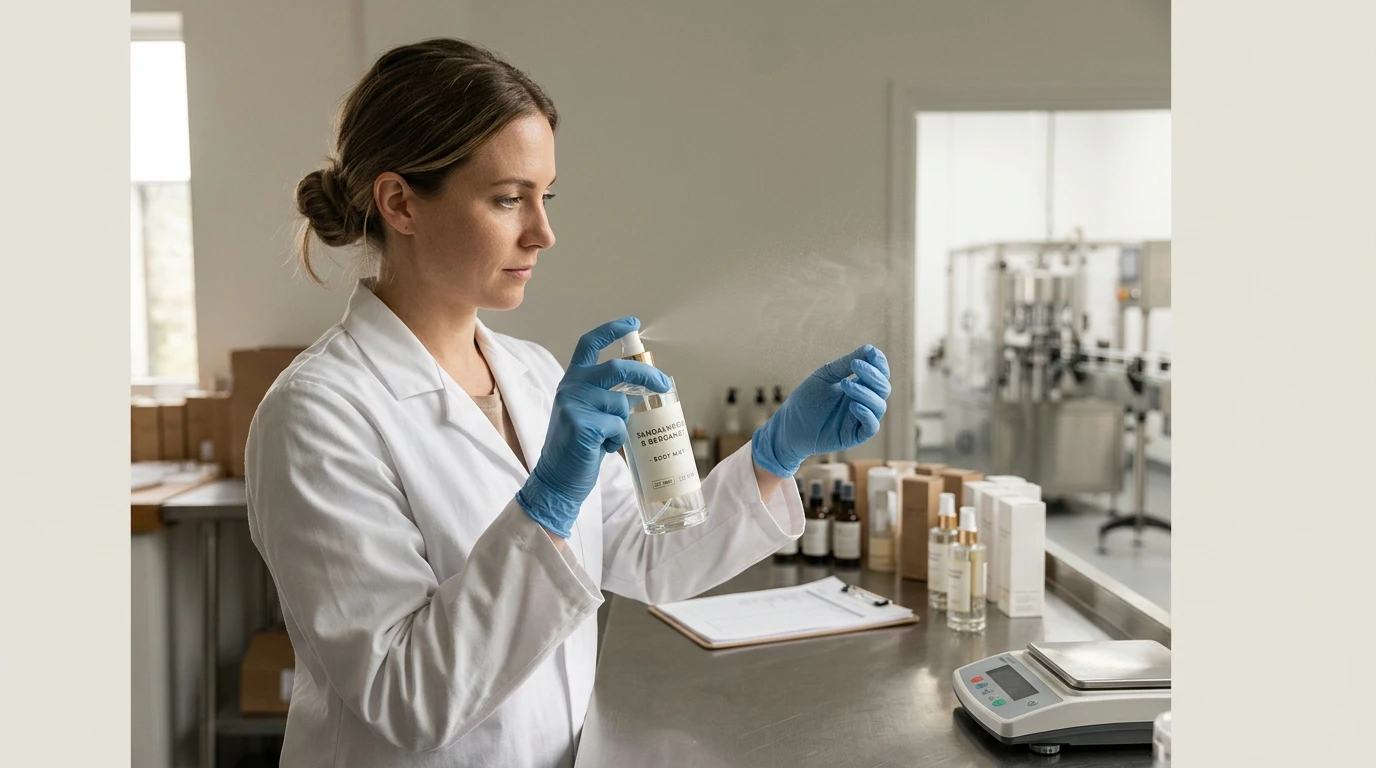
Le società commerciali che si spacciano per fabbriche sono il principale rischio in questa categoria. Queste domande aiutano a smascherarle:
- Quante linee di produzione gestite e quali apparecchiature di riempimento utilizzate?
- Qual è la superficie in piedi quadrati del vostro stabilimento e il numero di dipendenti?
- Potete condividere i registri di lotto (con dati oscurati) di una recente produzione?
- Chi detiene la proprietà intellettuale della formula della fragranza — voi o io?
- Posso programmare una visita guidata dal vivo in video dell'area di produzione?
- Quali certificazioni possiede la vostra struttura, e non quella di un partner?
- Qual è il vostro protocollo dettagliato per i test di stabilità?
- Potete indicare tre categorie di prodotti che producete attivamente internamente?
Una fabbrica reale risponde a queste domande con competenza. Un intermediario resta vago, svia la domanda o "verifica con il fornitore." Quella esitazione è già una risposta.
Errori comuni commessi dai brand nella scelta di un produttore
Ognuno di questi errori ha compromesso un lancio che sulla carta sembrava impeccabile:
- Fidarsi del campione senza un test di stabilità. Una fiala ha un profumo perfetto nella prima settimana. Insistete per ricevere un campione sottoposto a invecchiamento accelerato prima di fidarvi.
- {#0#Ignorare chi possiede la formula della fragranza. Se il produttore detiene la proprietà intellettuale, non potete trasferire la produzione altrove quando il rapporto si deteriora. Definite questo aspetto fin dall'inizio.
- Inseguire il prezzo più basso per unità. I costi di configurazione e le scorte invendute cancellano silenziosamente il "risparmio."
- Saltare una piccola produzione di prova a pagamento. Un primo ordine modesto insegna di più su un fornitore di qualsiasi scheda tecnica.
- Non confermare la fabbrica effettiva. Verifica di parlare con chi realizza il prodotto, non con un intermediario che applica un ricarico.
Il tuo prossimo passo: trasformare questa checklist in una rosa ristretta
Mantieni l'ordine gerarchico delle decisioni. Conformità prima di tutto — senza certificazioni, non c'è confronto. Stabilità al secondo posto — una fragranza che svanisce non vale nulla, indipendentemente da quanto sia conveniente il prezzo. MOQ e adeguatezza dei prezzi al terzo posto — adatta la dimensione dell'ordine alla reale situazione del tuo brand, non a quella che speri di raggiungere.
Ora passa all'azione. Richiedi preventivi dettagliati a tre produttori qualificati utilizzando il framework sopra indicato, poni a ciascuno le stesse domande e confronta le risposte fianco a fianco. Soprattutto, ordina un campione di stabilità a pagamento e lascialo invecchiare prima di impegnare anche un solo euro nella produzione in grandi volumi.
Pronto a creare la tua rosa ristretta?
Se cerchi un partner che gestisce produzioni OEM/ODM per brand globali dal 1995 — con uno stabilimento di 40,000㎡, 16 linee automatizzate, certificazioni GMP, ISO, FDA e SMETA, un MOQ accessibile di 1,000 unità e un elevato livello di personalizzazione, fino a stampi su misura e formule vegane — contatta Boymay per richiedere un preventivo e un campione di stabilità. Porta con te la checklist. Poni le domande più difficili. Scegli il produttore che risponde a tutte senza esitazioni.
FAQ: risposte alle domande sulla produzione di body mist
Qual è la quantità minima d'ordine per un body mist a marchio privato?
Varia notevolmente in base al tipo di fabbrica. I produttori di body mist con MOQ ridotto e adatti alle startup generalmente partono da circa 500–1,000 unità, mentre i grandi produttori conto terzi possono richiedere 10,000 unità o più. Boymay, ad esempio, stabilisce un MOQ di 1,000 unità, una quantità adatta ai brand che gestiscono un primo lotto di validazione senza impegnare eccessivamente il capitale.
Quanto costa produrre un body mist per unità?
Per un prodotto da 100ml, prevedete indicativamente $2.80–$4.50 per unità ai volumi iniziali, con una riduzione a $1.10–$2.10 per 10,000+ unità. La qualità dell'olio profumato è il principale fattore di variazione, seguita dalla scelta del flacone e della pompa e da eventuali stampi personalizzati.
Quanto tempo richiede la produzione di una body mist dal campione alla consegna?
I campioni personalizzati richiedono generalmente 7–14 giorni, a seconda della formula, della fragranza, dell'aspetto e del packaging. Una volta approvata la formula, la produzione in grandi volumi richiede solitamente 25–30 giorni, oltre ai tempi di spedizione verso il vostro mercato.
Ho bisogno della registrazione MoCRA per vendere body mist negli Stati Uniti?
Sì. Ai sensi del MoCRA, i prodotti cosmetici, comprese generalmente le body mist, richiedono la registrazione dello stabilimento e l'inserimento del prodotto nell'elenco della FDA, oltre alla designazione di una persona responsabile. Verificate che il vostro produttore supporti questo processo e fornisca la documentazione necessaria per l'inserimento del prodotto nell'elenco.
Posso richiedere una formulazione di body mist cruelty-free o vegana?
Sì. I produttori affidabili offrono formulazioni di body mist cruelty-free — ovvero senza test sugli animali sui prodotti finiti o sugli ingredienti — e possono sviluppare formule vegane che escludono ingredienti di origine animale. Richiedete sempre una documentazione scritta a supporto prima di utilizzare questa dichiarazione nelle attività di marketing.
A chi appartiene la formula della fragranza — a me o al produttore?
Dipende interamente dal vostro accordo. Con un private label standard, il produttore è proprietario della formula e può venderla ad altri. Con uno sviluppo personalizzato da zero, negoziate per iscritto la proprietà della formula, in modo da conservare la libertà di trasferire la produzione altrove in futuro.