

Gli elettrodomestici puliti non sono solo piacevoli da avere — sono essenziali per un bucato igienico, capi dal profumo fresco e una maggiore durata delle macchine su cui hai investito. Le lavatrici, in particolare, richiedono una manutenzione regolare per prevenire l'accumulo di detergente, il biofilm, la muffa e gli odori di chiuso che possono trasferirsi ai tessuti.
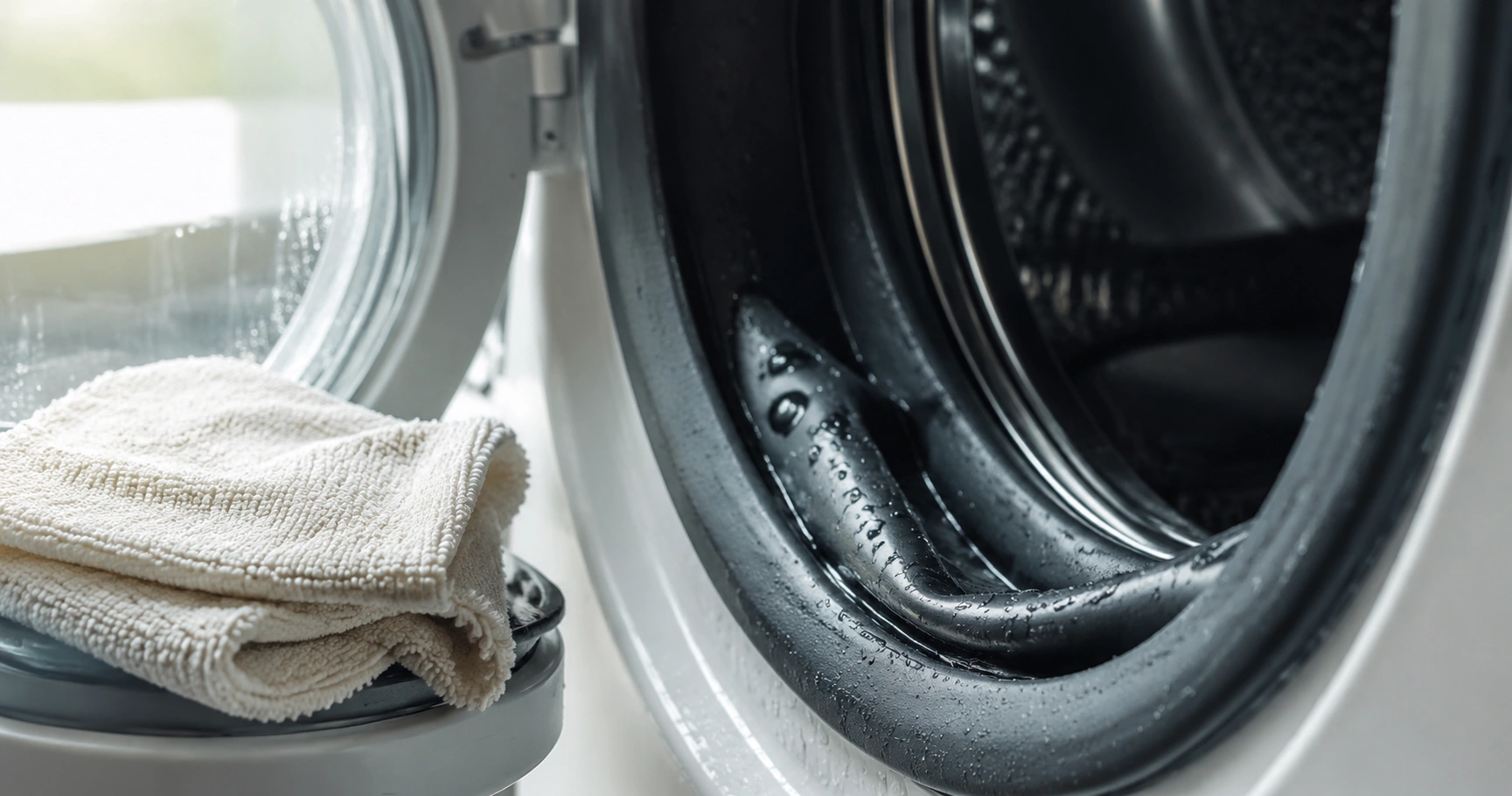
Ultimamente, una popolare tendenza online spinge i proprietari di casa ad aprire il mobile della cucina per una soluzione rapida: inserire una pastiglia per lavastoviglie nel cestello della lavatrice come trucco economico per la pulizia. I video su TikTok, i blog di pulizia e i Reels virali fanno sembrare tutto semplice — ed efficace.
Ma è davvero sicuro? In questa guida spiegheremo cosa è vero, cosa è rischioso e cosa raccomandano realmente gli esperti di elettrodomestici e i produttori. Prima di provare qualsiasi metodo di pulizia, controlla sempre prima il manuale d'uso della tua lavatrice.
Risposta breve: si possono usare le pastiglie detergenti per lavastoviglie in una lavatrice?
In generale, no — non è consigliato. Le pastiglie per lavastoviglie e i detergenti per lavatrici sono formulati per macchine, materiali, volumi d'acqua e tipi di sporco molto diversi.
Detto questo, un singolo uso accidentale probabilmente non rovinerà immediatamente la tua lavatrice. La vera preoccupazione è l'uso ripetuto o intenzionale, che comporta rischi concreti per le guarnizioni, lo scarico, gli odori e persino la garanzia.
Se il tuo obiettivo è avere una lavatrice più fresca e pulita, la soluzione più sicura è usare un prodotto specificamente indicato come detergente per lavatrici — e seguire alla lettera il manuale dell'elettrodomestico.
Perché alcune persone prendono in considerazione l'uso delle pastiglie per lavastoviglie in una lavatrice
Capire perché questo trucco è diventato virale aiuta a spiegare perché così tante persone cercano innanzitutto "pastiglie per lavastoviglie in lavatrice".
Praticità e disponibilità
Nella maggior parte delle case, le pastiglie per lavastoviglie sono già disponibili. Sono predosate, confezionate singolarmente e senza sporcare — molto più pratiche che cercare un prodotto per la pulizia separato.
Metterne una nel cestello sembra intuitivo e veloce, soprattutto rispetto al dosaggio di detergenti liquidi o in polvere.
Percezione del costo
Per unità, le pastiglie per lavastoviglie spesso sembrano più economiche dei detergenti dedicati per la pulizia della lavatrice. Gli influencer della pulizia amplificano l’attrattiva del "due prodotti in uno" sui social media, facendo sembrare questo trucco una scelta intelligente per risparmiare.
L’idea che "un detergente valga l’altro"
Molti utenti presumono che qualsiasi pastiglia detergente ad alta efficacia possa funzionare in qualsiasi elettrodomestico. È qui che nasce il malinteso — ed è qui che uno sguardo più attento alla chimica chiarisce la situazione.
Pastiglie per lavastoviglie vs. detergenti per la pulizia della lavatrice: qual è la differenza?
Entrambi i prodotti sono progettati per pulire elettrodomestici, ma le loro formule, i livelli di schiuma e gli ambienti di utilizzo previsti non sono intercambiabili.
Per cosa sono progettate le pastiglie per lavastoviglie
Agiscono su residui di cibo, grasso, amidi e depositi di calcare sulle stoviglie.
Contengono in genere enzimi, agenti sbiancanti a base di ossigeno, componenti alcalini e brillantanti.
Progettate per cicli ad alta temperatura e a bassa schiuma all’interno di una lavastoviglie chiusa.
Formulate per essere compatibili con interni in acciaio inox, ceramica e vetro.
Per cosa sono progettati i detergenti per la pulizia della lavatrice
Agiscono su accumuli di detersivo, residui di ammorbidente, oli corporei, biofilm e muffa.
Formulato per essere sicuro per guarnizioni in gomma, cuscinetti del cestello e componenti in plastica.
Progettato per il volume d'acqua molto più elevato e l'agitazione meccanica di una lavatrice.
Schiuma attentamente controllata per prevenire problemi di traboccamento e drenaggio.
Confronto affiancato
| Caratteristica | Pastiglia per lavastoviglie | Detergente per la pulizia della lavatrice |
|---|---|---|
| Tipo di sporco trattato | Cibo, grasso | Residui di detergente, biofilm |
| Livello di schiuma | Molto basso (in una lavastoviglie) | Controllato, basso (in una lavatrice) |
| Materiali della macchina | Acciaio inossidabile, ceramica, vetro | Gomma, plastica, miscela di metalli |
| Volume d'acqua | Basso | Alto |
| Approvato dal produttore per il bucato | No | Sì |
Possibili rischi dell'uso di pastiglie detergenti per lavastoviglie in una lavatrice
Ecco cosa potrebbe andare storto — e perché la maggior parte dei marchi di elettrodomestici sconsiglia questa pratica.
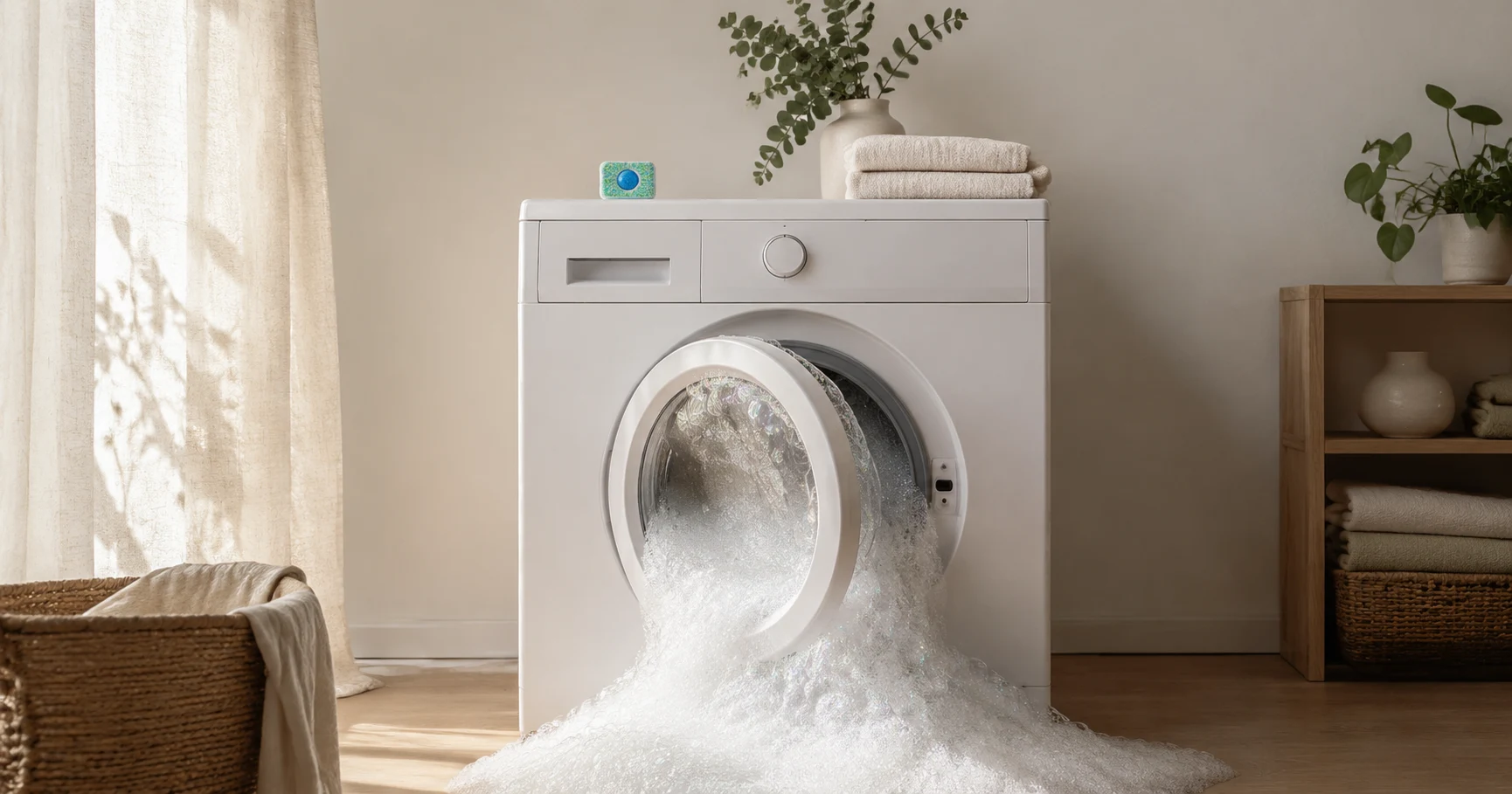
Schiuma eccessiva e fuoriuscite
Le lavatrici utilizzano una quantità d'acqua significativamente maggiore e un'agitazione molto più energica rispetto alle lavastoviglie. Anche le pastiglie per lavastoviglie "a bassa schiuma" possono produrre schiuma inaspettata quando vengono agitate con forza.
La schiuma eccessiva può fuoriuscire dalla guarnizione dello sportello o dal cassetto del detersivo, oppure attivare errori dei sensori che interrompono completamente il ciclo.
Residui sul cestello e sugli indumenti
Le pastiglie per lavastoviglie potrebbero non dissolversi completamente durante un ciclo di pulizia senza stoviglie e residui di cibo con cui reagire. I residui rimanenti possono trasferirsi al carico successivo, irritando potenzialmente la pelle sensibile o lasciando macchie sui tessuti scuri.
Danni a guarnizioni e tenute in gomma
I forti agenti alcalini e gli agenti sbiancanti presenti nelle pastiglie per lavastoviglie possono accelerare nel tempo l'invecchiamento dei componenti in gomma. Le guarnizioni dello sportello delle lavatrici a carica frontale sono particolarmente vulnerabili, poiché sono costantemente esposte all'umidità.
Odori persistenti
Le fragranze e i composti brillantanti presenti nelle pastiglie per lavastoviglie possono aderire alle superfici del cestello e alle guarnizioni. Il risultato? Talvolta un odore chimico o di profumo che si trasferisce al bucato appena lavato.
Problemi di scarico e della pompa
I frammenti di pastiglia non dissolti possono ostruire i filtri o i componenti della pompa. La schiuma eccessiva può anche interferire con i sensori e attivare codici di errore che richiedono un intervento di assistenza.
Dubbi sulla garanzia
L'uso di prodotti per la pulizia non approvati può invalidare la garanzia della lavatrice. I produttori in genere elencano i detergenti approvati nel manuale d'uso — e utilizzare prodotti non inclusi in tale elenco può lasciarti a tuo carico le riparazioni.
Cosa dovresti usare invece?
Esistono opzioni più sicure e in linea con le indicazioni del produttore per mantenere fresca la lavatrice.
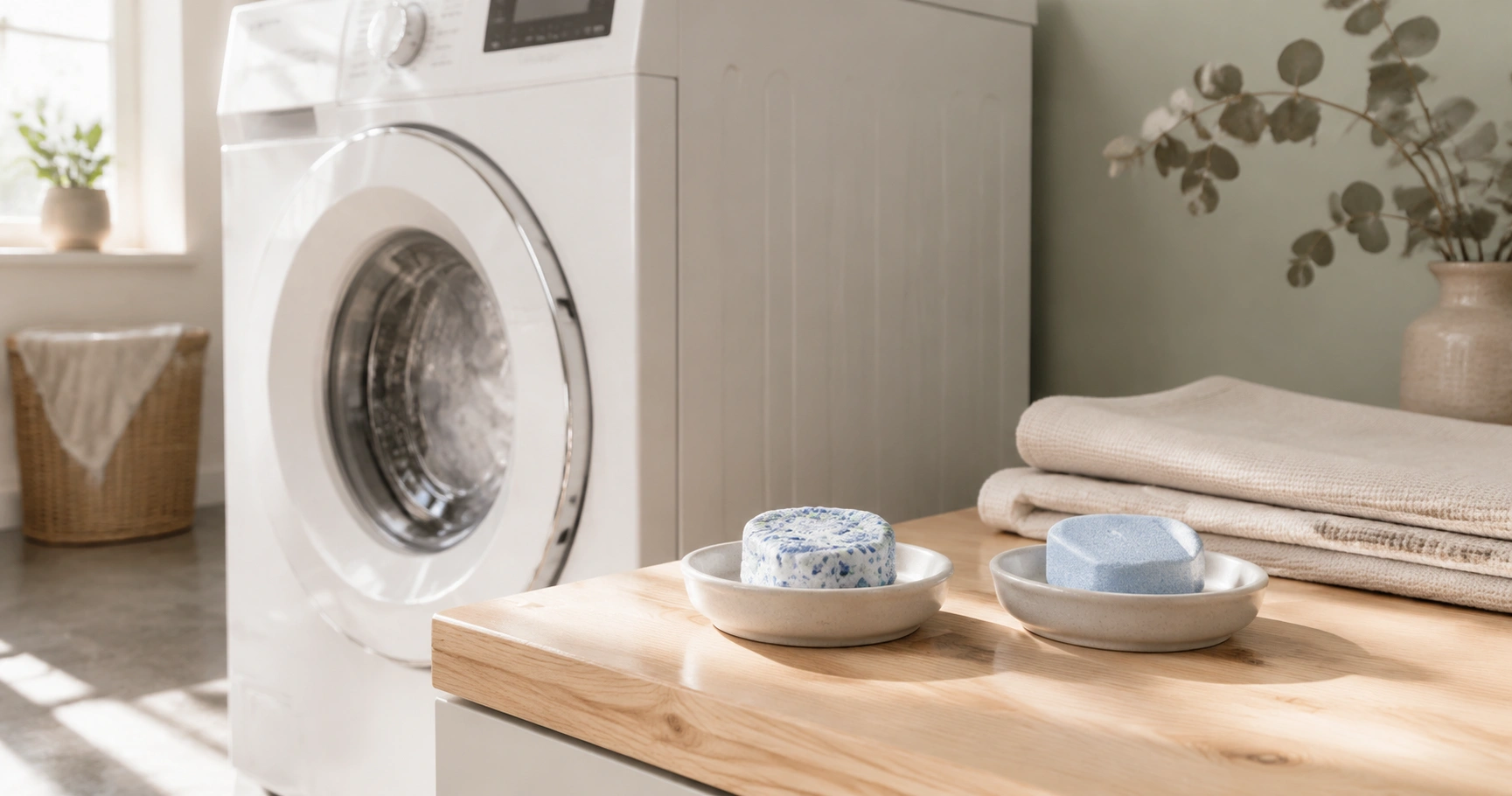
Pastiglie o polveri detergenti dedicate per la pulizia della lavatrice
Cerca prodotti etichettati esplicitamente come detergenti per la pulizia della lavatrice. Esempi comuni includono affresh, Tide Washing Machine Cleaner e pastiglie a marchio OEM di brand come LG, Samsung o Whirlpool.
Segui sempre le istruzioni relative a dosaggio e frequenza riportate sull'etichetta.
Cicli Self-Clean o Tub Clean consigliati dal produttore
La maggior parte delle lavatrici moderne dispone di un ciclo integrato "Tub Clean," "Self Clean," o "Drum Clean". Consulta il manuale per la procedura esatta e per il detergente che il produttore consiglia di utilizzare insieme a esso.
Soluzioni domestiche delicate
L'aceto bianco o il bicarbonato di sodio possono funzionare con moderazione per una leggera rinfrescata, ma non sostituiscono un detergente adeguato in ogni situazione.
Non mescolare mai prodotti per la pulizia — ad esempio, non combinare mai la candeggina con aceto o ammoniaca, poiché ciò può rilasciare fumi tossici. Inoltre, verifica la compatibilità con il modello specifico della tua lavatrice prima di provare qualsiasi metodo fai-da-te, poiché alcuni produttori sconsigliano l'uso frequente dell'aceto.
Come pulire una lavatrice in sicurezza
Ecco una procedura semplice e sicura, adatta ai requisiti del produttore, per pulire la lavatrice senza rischi — senza dover andare a tentativi.
Passaggio 1: Legga il manuale d’uso
Individui la sezione dedicata alla manutenzione ordinaria. Prenda nota di eventuali detergenti vietati o dei cicli specifici richiesti dalla sua macchina.
Passaggio 2: Svuoti il cestello
Rimuova tutta la biancheria, la lanugine e gli oggetti liberi. Pulisca le parti visibili della guarnizione dell’oblò con un panno in microfibra umido.
Passaggio 3: Esegua un ciclo di pulizia con un prodotto approvato
Inserisca una pastiglia detergente per lavatrici (oppure la dose consigliata dal produttore) direttamente nel cestello. Selezioni quindi il ciclo “Pulizia cestello”, “Autopulizia” oppure il ciclo a vuoto più caldo disponibile.
Passaggio 4: Pulisca guarnizioni, cassetto e filtro
Estragga il cassetto del detersivo e lo risciacqui sotto acqua tiepida. Pulisca con attenzione le pieghe della guarnizione in gomma — soprattutto nelle lavatrici a carica frontale — e controlli il filtro della pompa di scarico secondo quanto indicato nel manuale.
Passaggio 5: Lasci lo sportello socchiuso tra un utilizzo e l’altro
Lasciare arieggiare il cestello consente all’umidità di evaporare. Con il tempo, questo riduce in modo significativo la formazione di muffa e l’accumulo di cattivi odori.
Frequenza di pulizia consigliata
Ogni 1 o 2 mesi per le famiglie medie.
Più spesso se lavi capi molto sporchi, cucce per animali domestici o se utilizzi principalmente cicli a freddo, che tendono a lasciare più residui.
Cosa fare se hai già usato una pastiglia per lavastoviglie nella tua lavatrice
Non farti prendere dal panico — ma non ripetere l’errore. Ecco come intervenire.
Se il ciclo è ancora in esecuzione
Metti in pausa o annulla il ciclo, se la tua macchina lo consente. Controlla l’oblò e il cassetto del detersivo per verificare l’eventuale accumulo di schiuma.
Se c’è schiuma eccessiva o fuoriuscite
Arresta la macchina e spegni l’alimentazione dall’interruttore a parete. Assorbi l’eventuale acqua con degli asciugamani, quindi contatta il servizio di assistenza del produttore o un tecnico qualificato per elettrodomestici per ricevere indicazioni.
Se la macchina sembra funzionare normalmente
Esegui uno o due cicli di solo risciacquo con il cestello vuoto per eliminare i residui. Pulisci la guarnizione, il cestello e il cassetto del detersivo. Evita di lavare i vestiti finché non sei certo che non rimangano residui.
Se noti odori, codici di errore o problemi di scarico
Smetti di usare la macchina. Contatta il servizio di assistenza del produttore o un centro di riparazione certificato. Non tentare riparazioni interne da solo, a meno che tu non sia qualificato per farlo.
Conclusione
Potrebbe essere allettante riutilizzare una pastiglia per lavastoviglie avanzata quando la lavatrice ha bisogno di una pulizia, ma le formule, i profili di schiuma e la compatibilità dei materiali semplicemente non sono stati progettati per sovrapporsi. Le pastiglie per lavastoviglie sono pensate per i piatti. I detergenti per la pulizia della lavatrice sono pensati per gli elettrodomestici per il bucato — e questa distinzione è importante per la durata della lavatrice.
L’approccio più intelligente è utilizzare un detergente specifico per la pulizia della lavatrice, seguire il manuale d’uso e attenersi a una routine di pulizia mensile costante. Pulisca la guarnizione, il cassetto e il filtro, e lasci arieggiare il cestello tra un carico e l’altro.
E se qualcosa dovesse andare storto — perdite, codici di errore, odori persistenti o schiuma inspiegabile — smetta di usare la macchina. Contatti il produttore o un tecnico qualificato invece di continuare a fare tentativi. Il metodo di pulizia più sicuro è sempre quello per cui il suo elettrodomestico è stato progettato.
FAQ
D: Una pastiglia per lavastoviglie può danneggiare la mia lavatrice?
R: Nella maggior parte dei casi, un uso accidentale singolo difficilmente causerà danni immediati e gravi. Può tuttavia lasciare residui o odori, e l’uso ripetuto aumenta il rischio di usura delle guarnizioni, problemi di scarico e questioni relative alla garanzia. In caso di dubbio, contatti il produttore per consigli specifici per il modello.
D: Le pastiglie per lavastoviglie sono uguali alle pastiglie per la pulizia della lavatrice?
R: No. Nonostante l’aspetto simile, sono prodotti chimicamente distinti. Le pastiglie per la pulizia della lavatrice sono formulate specificamente per i materiali degli elettrodomestici per il bucato, i volumi d’acqua e i tipi di sporco. Legga sempre attentamente l’etichetta del prodotto prima dell’uso.
D: Posso usare invece aceto o bicarbonato di sodio?
R: Possono aiutare a rinfrescare la lavatrice per una pulizia leggera, ma non rappresentano un sostituto garantito. Li utilizzi separatamente — non mescoli mai l’aceto con la candeggina o altri detergenti. Alcuni produttori sconsigliano anche l’uso frequente dell’aceto perché la sua acidità può degradare nel tempo le guarnizioni in gomma. Controlli sempre prima il manuale.
D: Con quale frequenza dovrei pulire la mia lavatrice?
R: Per la maggior parte delle famiglie, si consiglia generalmente un ciclo di pulizia mensile o bimestrale. Le lavatrici a carica frontale richiedono spesso una pulizia più frequente della guarnizione per evitare la formazione di muffa nelle pieghe.
D: Cosa devo fare se la mia lavatrice ha un cattivo odore?
R: Inizi eseguendo un ciclo di pulizia con un detergente approvato per lavatrici. Pulisca accuratamente la guarnizione, il cassetto del detersivo e il filtro di scarico, e lasci lo sportello aperto tra un utilizzo e l'altro. Se l'odore persiste, consulti il produttore — potrebbe indicare un accumulo più profondo o un problema di drenaggio che richiede l'intervento di un professionista.
D: È sicuro mescolare i detergenti per lavatrici con altri detersivi?
R: No. Utilizzi sempre i prodotti per la pulizia uno alla volta e segua le istruzioni riportate sull'etichetta. Mescolare prodotti chimici — in particolare la candeggina con acidi o ammoniaca — può sprigionare fumi nocivi e danneggiare la macchina.