
Passeggia in qualsiasi corsia dedicata al benessere e li vedrai: sacchetti di cristalli colorati che promettono di "eliminare le tossine" mentre fai il bagno. Sembra fantastico. Sembra anche un po’ troppo bello per essere vero, non è così?
Quindi tagliamo il rumore di fondo. Questa è un’analisi chiara e diretta di ciò che un bagno di sale può e non può fare — separando il marketing dalle prove reali, così saprai esattamente per cosa stai pagando quando riempi la vasca.
Da dove nasce l’idea del "bagno detox"
Nessuno si è seduto a tavolino per inventare il bagno detox dall’oggi al domani. Si è sviluppato lentamente, prendendo in prestito credibilità da secoli di bagni nelle sorgenti minerali prima di ricevere una moderna operazione di rebranding.
Il problema è che l’affermazione ha superato le prove. Il "bagno rilassante" è diventato silenziosamente un "trattamento che elimina le tossine" e, una volta affermatasi questa impostazione, è rimasta.
L’ascesa della cultura del bagno nel benessere
Nell’ultimo decennio, spa e marchi del benessere hanno puntato con decisione sul rituale dell’immersione. I social media hanno fatto il resto — una vasca calda, qualche petalo sparso, una didascalia luminosa su come "resettare il corpo".
È un’immagine accattivante. Onestamente, una parte regge. Il problema è la componente "detox", aggiunta per vendere più prodotti.
Cosa intendono di solito le persone con "detox"
Quando la maggior parte delle persone dice "detox", intende qualcosa di vago — sentirsi più leggeri, meno gonfi, rigenerati. Si tratta più di uno stato emotivo che di uno medico.
Dal punto di vista medico, la detossificazione è un processo specifico che i tuoi organi gestiscono ininterrottamente. Non è qualcosa che si attiva restando seduti in acqua calda per venti minuti.
La grande domanda: un bagno può davvero estrarre le tossine?
Rispondiamo in modo diretto, fin da subito: no, un bagno non estrae tossine dal corpo in alcun senso significativo.
Questa è la versione onesta. Ma non è tutta la storia, perché "non disintossica" è molto diverso da "non aiuta". Seguimi.
Il sudore elimina le tossine?
Ecco la convinzione che sostiene gran parte del ragionamento: sudi in un bagno caldo, quindi stai espellendo con il sudore le sostanze nocive. Sembra logico.
Tranne per il fatto che il sudore è composto per circa il 99% da acqua, più un po’ di sale e tracce di minerali. È un sistema di raffreddamento, non un sistema di filtrazione. La vera filtrazione avviene nel fegato e nei reni, che elaborano ed eliminano i rifiuti molto più efficacemente di quanto i pori potrebbero mai fare.
Gli studi che analizzano la composizione del sudore rilevano costantemente solo tracce minime, spesso trascurabili, di metalli pesanti — lontanamente insufficienti per essere rilevanti ai fini della "disintossicazione". Di questo compito si occupano i reni, e non hanno bisogno di un bagno per farlo.
Assorbimento del solfato di magnesio attraverso la pelle: cosa mostra la ricerca
È qui che la questione diventa davvero interessante, ed è anche qui che inviterei alla cautela rispetto ad affermazioni categoriche in entrambe le direzioni.
Il sale di Epsom è solfato di magnesio. L’idea è che l’immersione consenta al magnesio di essere assorbito attraverso la pelle. Esiste un piccolo studio pilota, citato frequentemente, condotto da ricercatori della University of Birmingham, secondo cui i livelli di magnesio aumentavano dopo bagni con sale di Epsom — ma era di dimensioni molto ridotte, non pubblicato in una rivista sottoposta a peer review e mai replicato in modo solido.
La pelle è, per sua natura, una barriera efficace. Quindi la sintesi più corretta è questa: un assorbimento transdermico significativo del solfato di magnesio rimane non dimostrato. Una certa quantità potrebbe attraversarla, ma non in modo sufficientemente affidabile da considerarlo un trattamento sanitario su cui fare affidamento.
Il verdetto onesto sull’etichetta "detox"
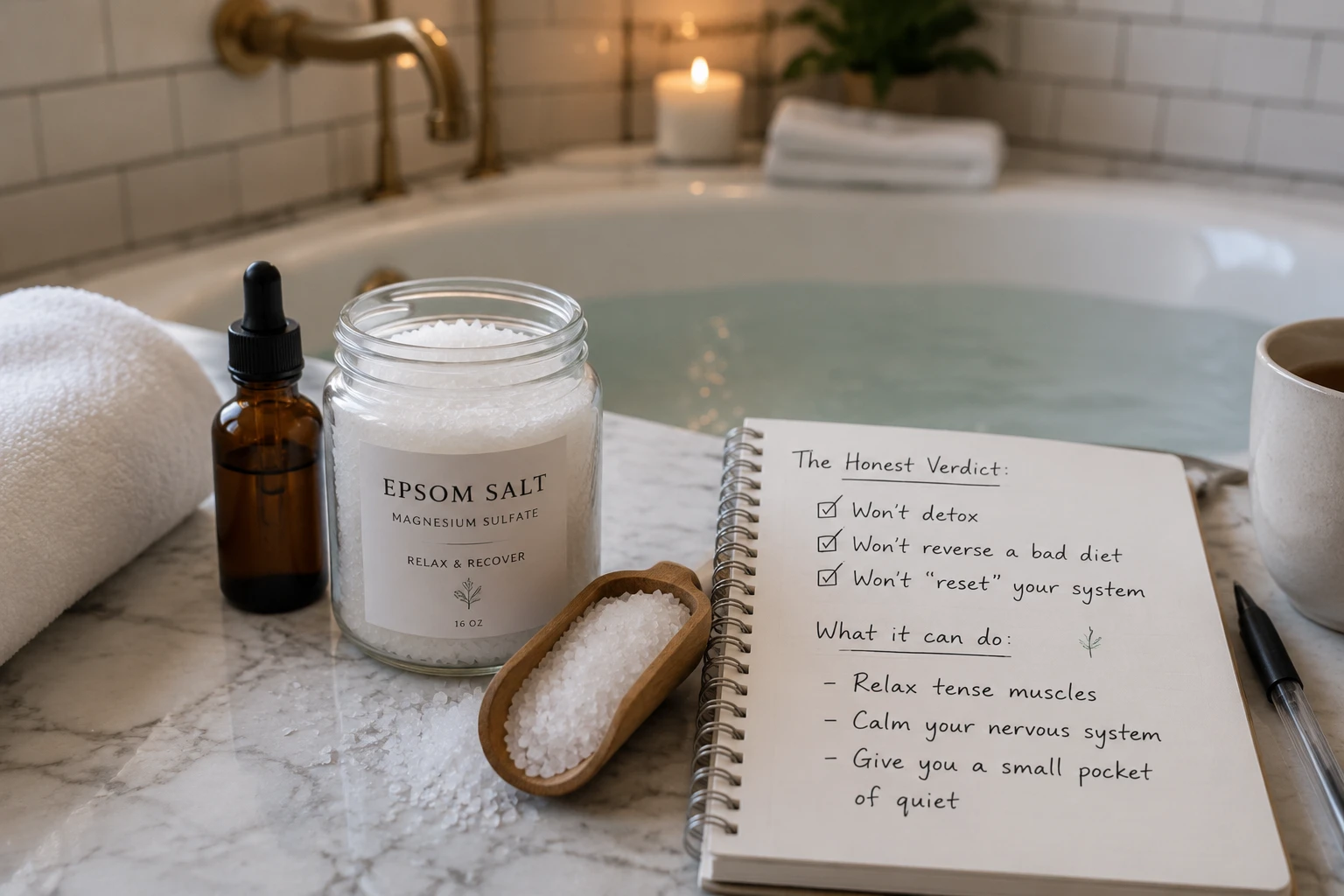
Un bagno non eliminerà le tossine. Non annullerà una cattiva alimentazione né "resetterà" il tuo organismo. Se un prodotto lo promette, sta esagerando.
Ciò che può fare, però, è reale e vale la pena: rilassa i muscoli tesi, calma il sistema nervoso e ti offre un piccolo spazio di quiete in una giornata frenetica. Questa è la proposta onesta — ed è una buona proposta.
Mito vs Realtà: una rapida panoramica
La maggior parte degli articoli gira intorno a questo tema. Preferisco semplicemente esporlo chiaramente.
| L'affermazione | Cosa è davvero vero |
|---|---|
| I sali da bagno eliminano le tossine dal corpo | Se ne occupano il fegato e i reni; l'acqua salata non lo fa |
| L'acqua scolorita dimostra che le tossine sono uscite | Il colore è una reazione chimica, non le tue "tossine" |
| Più sale equivale a un effetto più forte | Oltre un certo punto, il sale in eccesso secca solo la pelle |
| L'immersione rilassa i muscoli e allevia la tensione | Assolutamente vero — questo è il vero beneficio |
Mito: i sali da bagno eliminano le tossine dal corpo
Quando ti immergi, il sale si scioglie e l’acqua calda aumenta la temperatura della pelle. In sostanza è tutto qui. Nulla viene estratto dal flusso sanguigno attraverso i piedi o la schiena.
La sensazione di relax che provi è reale — deriva semplicemente dal calore e dalla calma profumata di magnesio del prendersi una pausa, non da alcuna depurazione.
Mito: il colore dell’acqua dimostra che la disintossicazione funziona
Probabilmente hai visto i video del "pediluvio ionico" in cui l’acqua diventa marrone e torbida. Sembra d’effetto. Ma è anche un trucco da salotto.
Quel colore deriva dall’elettrolisi che reagisce con gli elettrodi metallici e il sale nell’acqua — accade sia che i tuoi piedi siano immersi oppure no. L’acqua sporca non sono le tue tossine. È ruggine e reazione minerale, punto e basta.
Realtà: veri benefici piacevoli che vale la pena avere
Ora passiamo alla parte che merita davvero ai sali da bagno un posto nel tuo armadietto.
Benefici del bagno con sali di Epsom per il relax
L’acqua calda è un metodo ben documentato per rilassare il corpo e aiutarti a rallentare prima di andare a dormire. Aggiungi sali ricchi di magnesio e una fragranza che ti piace, e avrai creato un valido rituale per distenderti.
Che il magnesio in sé faccia molto oppure no, il rituale aiuta sicuramente. Il tuo corpo percepisce "caldo, silenzio, niente fretta" e inizia a lasciarsi andare.
Bagno lenitivo per alleviare i dolori muscolari dopo l’attività fisica
Questo è l'uso più affidabile e pratico di tutti. Dopo una lunga camminata, un allenamento o una giornata trascorsa in piedi, un bagno caldo allevia la rigidità migliorando la circolazione e rilassando le fibre muscolari contratte.
Atleti e fisioterapisti si affidano da anni ai bagni in acqua calda per il recupero post-attività. Non è magia — solo un comfort valido, semplice ed efficace.
Comfort per la Pelle e Cura di Sé Quotidiana
Un delicato bagno ai sali può lasciare la pelle più morbida e lenita, soprattutto nel caso di miscele con minerali aggiunti. E c'è un vero valore anche nel semplice gesto in sé — un bagno fatto come si deve è un piccolo rituale accessibile che ti ricorda che hai il permesso di riposare.
Cosa Contiene Davvero un Bagno di Qualità
Se il beneficio riguarda il comfort piuttosto che la disintossicazione, allora la qualità conta in modo diverso. Stai acquistando un'esperienza, quindi gli ingredienti devono meritare il loro posto.
Ingredienti Comuni nei Bagni Detox e a Cosa Servono
Solfato di magnesio (sale di Epsom): La base classica, apprezzata per la sua consistenza morbida e la reputazione di rilassare i muscoli.
Sale marino: Ricco di minerali e delicatamente esfoliante; spesso utilizzato in miscele ammorbidenti per la pelle.
Miscele di minerali (come il sale del Mar Morto): Contengono magnesio, potassio e calcio — apprezzate per lenire la pelle secca e irritata.
Botanici e oli essenziali: Lavanda, eucalipto, camomilla — sono ciò che definisce l'aspetto aromaterapico e il tono emotivo del bagno.
Come Scegliere un Sale da Bagno che Valga Davvero la Pena
Leggi l’etichetta. Un elenco di ingredienti breve e onesto è meglio di uno lungo, pieno di vaghi "complessi detox proprietari."
Cerca trasparenza sul tipo di sale e su eventuali oli aggiunti. Ecco poi un segnale discreto: più un prodotto promette in modo aggressivo di "eliminare le tossine," meno mi fiderei del resto delle sue affermazioni. I buoni prodotti vendono comfort, non miracoli.
Come Fare un Bagno Migliore (Metodo Semplice)
Mantieni l’acqua calda, non bollente — circa 37–39°C (all’incirca 100–102°F) è confortevole e sicuro.
Usa circa da mezza a una tazza di sale per una vasca standard. Di più non è meglio.
Rimani in ammollo per 15–20 minuti. Oltre quel tempo, stai principalmente solo facendo raggrinzire le dita.
Bevi un po’ d’acqua dopo, poiché i bagni caldi possono lasciarti leggermente disidratato.
Chi Dovrebbe Fare Attenzione
Per la maggior parte delle persone in buona salute, un bagno caldo con sale comporta pochi rischi. Ma non è così per tutti, ed è giusto dirlo chiaramente.
Quando Consultare Prima un Medico
Se sei in gravidanza, gestisci una patologia cardiaca o hai il diabete con ridotta sensibilità ai piedi, consulta un medico prima di prendere l’abitudine di fare bagni molto caldi. L’acqua molto calda influisce sulla pressione sanguigna e sulla circolazione.
Evita il bagno con sale in presenza di ferite aperte o pelle lesionata, e procedi con delicatezza se hai eczema o pelle sensibile — il sale può pizzicare o seccare la pelle. In caso di dubbio, una rapida parola con il tuo medico di base non costa nulla.
In sintesi
Un bagno di sale non è un miracolo detox, e qualsiasi prodotto che affermi il contrario sta forzando la verità. I tuoi organi si occupano già della vera depurazione, senza bisogno di immersioni.
Tolto l'hype, resta qualcosa di davvero valido: un rituale economico e a basso impegno che rilassa i muscoli indolenziti, calma la mente e ritaglia un po' di tranquillità. Mantieni i sali da bagno nella tua routine — ma per le ragioni giuste, con la consapevolezza di ciò che offrono davvero.
FAQ
D: I sali da bagno disintossicano davvero il corpo?
R: No — non in senso letterale. Il fegato e i reni si occupano della disintossicazione. Ciò che i sali da bagno offrono realmente è relax, sollievo dalla tensione muscolare e un rituale distensivo, che è già un ottimo motivo per usarli.
D: Quanto tempo dovrei restare in ammollo per percepirne i benefici?
R: Circa 15-20 minuti è il tempo ideale. Abbastanza a lungo perché il calore rilassi i muscoli, senza però provocare stordimento o seccare eccessivamente la pelle.
D: Posso fare un bagno di sale ogni giorno?
R: Puoi farlo, anche se molte persone trovano che alcune volte a settimana siano meglio per la pelle. I bagni caldi quotidiani possono seccarla, quindi ascolta come reagisce la tua pelle e applica una crema idratante dopo.
D: Aggiungere più sale lo rende più efficace?
R: Non proprio. Una volta che l'acqua risulta piacevole, il sale in più tende soprattutto a seccare la pelle e a far finire il sacchetto più in fretta. Da mezza a una tazza per vasca è più che sufficiente.
D: I bagni con sale di Epsom fanno bene ai muscoli indolenziti?
R: Sì — questo è uno dei loro impieghi più affidabili. L'acqua calda migliora la circolazione e rilassa i muscoli contratti, alleviando la rigidità post-allenamento e i dolori generali. Che si tratti del magnesio o del calore, il sollievo è reale.
D: Qual è la differenza tra il sale di Epsom e i normali sali da bagno?
R: Il sale di Epsom è specificamente solfato di magnesio. "Sali da bagno" è un termine più ampio che comprende sale marino, miscele minerali e formule profumate che possono o meno contenere sale di Epsom. Se desideri quella classica sensazione di acqua morbida e immersione rilassante per i muscoli, controlla sull'etichetta la presenza di solfato di magnesio.